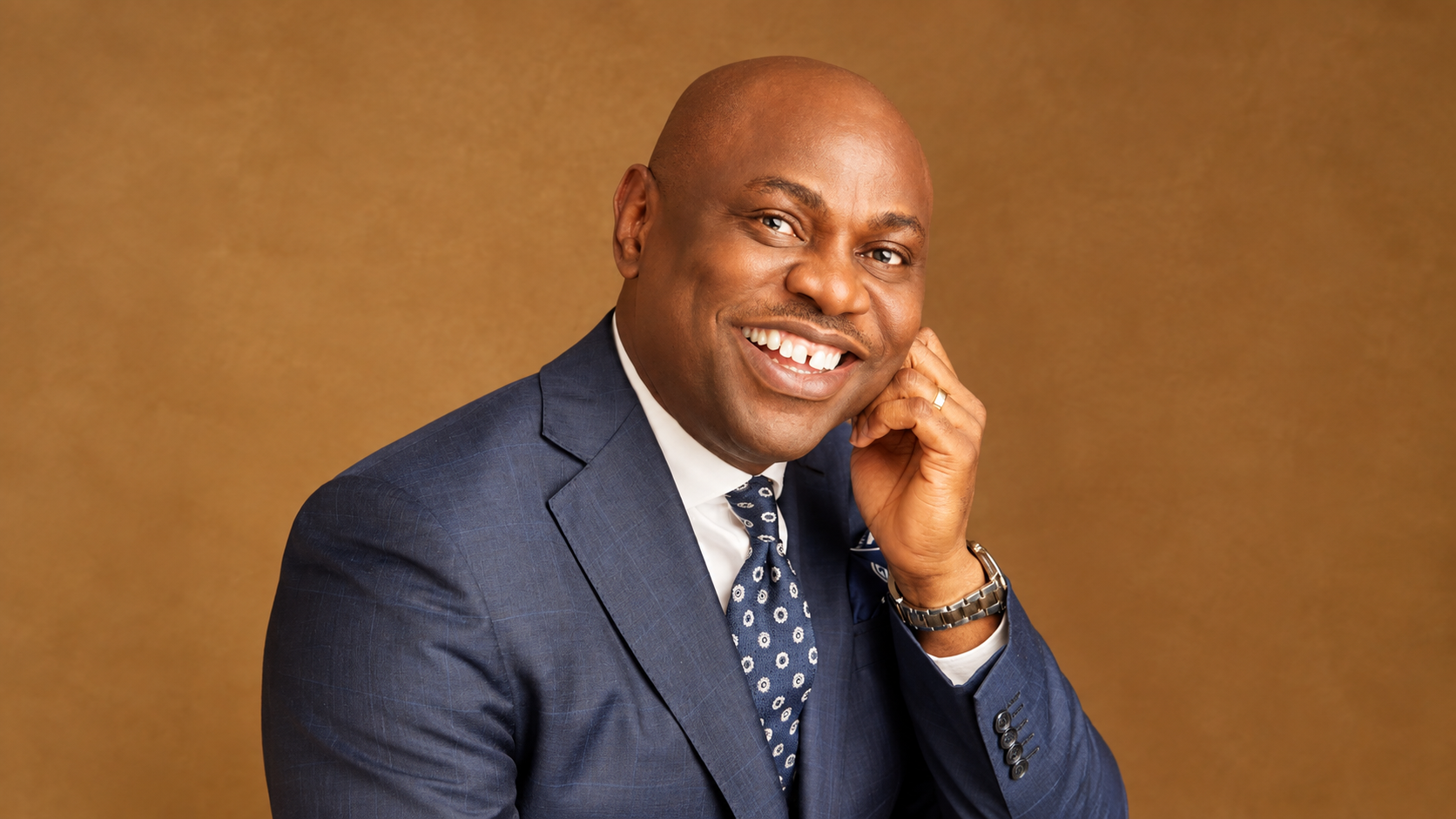
At 21, Ashley M. Fox was earning more money than both of her parents. She had secured her dream job on Wall Street, worked with some of the wealthiest people in the world and appeared to be living the success story she had imagined growing up. But beneath the suits, salary and prestige, Fox had been searching for something money could not provide.
The former Wall Street analyst and founder and CEO of Empify, a financial education company focused on helping adults and children understand and build wealth, shared how her journey had changed her understanding of money, success and financial identity.
Fox had grown up in Philadelphia in a middle-class, two-parent household and was the first person in her family to attend college. She loved mathematics and business and had always imagined herself working on Wall Street. Her internships at Howard University strengthened that ambition and eventually led her to New York City, the financial capital of the world.
She secured a position at one of the world’s largest banks, where she worked with clients who had at least $25 million in assets. Her responsibility was to help wealthy clients invest, preserve and protect their fortunes and ensure that their wealth could be passed down to future generations.
YOU CAN ALSO READ: Nathan Kirsh Joins Africa’s $20 Billion Club After Fortune Surges by $10 Billion
The experience exposed Fox to a level of wealth she had never encountered growing up. She began observing not only how wealthy people lived but, more importantly, how they structured and managed their money.
That exposure led to one of her most significant realisations: she deserved to be the client on the other side of the table.
Fox noticed that wealthy clients rarely allowed their money to remain idle. They had multiple accounts, each designed for specific purposes, and their excess cash was routinely put to work through investments.
She began applying the same principles to her own finances. If wealthy clients were investing their money rather than allowing inflation to erode its value, she reasoned, she needed to do the same. But her Wall Street experience also forced her to confront why she had wanted wealth in the first place.
Fox explained that she had often associated money, business suits and Wall Street with success. Her first Wall Street signing bonus had gone toward buying a Prada bag before she had even secured an apartment.
She later recognised that much of her pursuit of money had been connected to self-worth. “I was always chasing money because that’s what I thought made me worthy,” she recalled. Eventually, she realised that constantly chasing money could become an endless race because there would always be someone with more.
Her perspective began to change when she compared her own career trajectory with that of the clients she served. Even if she remained at the bank for another decade, she realised that her income trajectory did not put her on the same path as the people whose wealth she was managing. That recognition eventually pushed her away from Wall Street.
In 2013, Fox left the financial industry with about $30,000. Within three months, she said, she had lost everything. She was forced out of her apartment, moved back to Philadelphia and spent two years living on her parents’ couch. The experience stripped away the professional identity she had built around her Wall Street career.
Without the job, salary and prestige, Fox had to confront a difficult question: Who was she without the things she had previously used to define herself?
She described the experience as painful but transformative. Losing her money forced her to understand the fears and insecurities that had shaped her relationship with wealth. It also helped her understand the people she eventually wanted to serve.
After leaving Wall Street, Fox became an independent financial adviser. Unlike her previous role, she was now working directly with everyday people. She quickly discovered that financial knowledge alone did not guarantee financial action.
Many people were intimidated by financial terminology and lacked the confidence to invest. Fox realised that she had to move away from speaking in what she described as her “Wall Street finance girl language” and begin communicating in a way that reflected the fears, experiences and realities of ordinary people. That experience became an important foundation for Empify.
Fox had initially envisioned bringing Wall Street financial knowledge to a much wider audience, although she did not yet know exactly what the business would look like. The idea eventually evolved into Empify, a name she developed around the concepts of empowerment and transformation. For Fox, financial education was never supposed to be only about teaching people how to buy stocks or manage investments. It was about changing the mindset that prevented people from believing they belonged in the world of wealth.
“What good is it if we’re teaching you how to invest, but you don’t feel deserving of it?” she asked. She later began developing financial education programmes for middle and high school students. For about a year, she worked with schools while building the curriculum. In 2017, Empify secured a contract with a Philadelphia school district, taking its programme into 26 schools.
The experience reinforced her belief that financial education needed to begin early. She argued that children could otherwise grow up repeating the same financial mistakes they had seen from previous generations.
Empify subsequently grew into a financial education business designed to help adults and children understand wealth creation and develop the confidence to act on that knowledge. Fox attributed the company’s growth to persistence and its mission rather than a perfect business plan.
She said Empify had not originally been created simply to make money. Instead, it had been built around a desire to financially empower people who were often overlooked by traditional financial institutions. Her entrepreneurial journey had also forced her to confront another uncomfortable relationship with money: her reluctance to pay herself.
At one point, Fox said, she could pay employees thousands of dollars in bonuses while having only about $100 in her own bank account. She had believed that every dollar should be reinvested into the business. Eventually, her coaches helped her recognise that her inability to pay herself was connected to her discomfort with having money.
She began treating herself as an employee of the company and started paying herself consistently. Although it initially felt uncomfortable, she said the shift helped her understand that building a successful company also required building personal financial security. Fox also came to define wealth differently.
For her, wealth was not simply about having a large bank balance. She described it as a holistic experience involving freedom, options, mental peace, health, relationships and the ability to create the life one wanted. Her advice to young people seeking to build wealth reflected the lessons she had learned on Wall Street.
She encouraged people to pay themselves, invest in their own ideas or other people’s businesses, seek professional and personal support, and begin investing early rather than waiting until they believed they had enough money. She also emphasised the importance of preparing for generational wealth.
Fox recalled how her father had organised his financial affairs before his death, ensuring that his family knew what had been left to them. The experience showed her that creating wealth was only one part of the process; protecting and transferring it was equally important.
She advocated having a will, appropriate trusts, clear beneficiaries and a documented plan for passing assets to family members. Her approach to generational wealth was not limited to people who already had millions. She encouraged people with modest resources to start with what they could, including life insurance and a clear plan for what they wanted to leave behind.
Fox also identified three broad asset categories that she had observed among wealthy clients: marketable securities, alternative investments and cash. Marketable securities included stocks and bonds that could be converted into cash relatively quickly. Alternative investments included assets such as real estate and private businesses, which could potentially appreciate over longer periods but were less liquid. Cash, she explained, also had a role, but most wealth needed to be put to work rather than left sitting idle. Her own financial mistakes had also become lessons rather than regrets.
Fox recalled that after leaving Wall Street, she had travelled to the south of France and Italy and rented a yacht, only to be evicted from her apartment shortly afterwards.
YOU CAN ALSO READ: Burna Boy Dominates African Touring Market With $43.26m
Looking back, she said the experience had taught her the difference between receiving a salary and building a business. It also helped her understand the psychology behind spending and financial insecurity. Her relationship with money had continued to evolve through therapy, which she described as one of the best investments she had made.
Therapy had helped her understand that some of the beliefs she carried about money, work and success were inherited from childhood, family and society rather than being beliefs she had consciously chosen for herself. Fox’s new perspective was that she could create wealth, change the world and build a meaningful life without needing to return to Wall Street.
Ultimately, her journey had taken her from managing the wealth of millionaires and billionaires to helping ordinary people understand how they could build wealth themselves.
The woman who once wanted to sit on the other side of the table had begun building her own seat, and creating a pathway for others to do the same. Her final message to people looking to build wealth had been simple: start today. She encouraged beginners to open an investment account, learn how the market worked and consider investing in companies they understood and used themselves.
For Fox, wealth had ultimately become about far more than money. It had become about freedom, confidence, purpose and the ability to create opportunities not only for herself, but for generations that would follow.