For decades, the chief executive officer occupied a fascinating place in the imagination of business. The CEO appeared to be the person at the summit, the final authority in the boardroom, the individual whose signature unlocked major investments, whose decisions determined strategy and whose presence shaped the organisation. Yet beneath the glamour of the corner office was a more demanding reality.
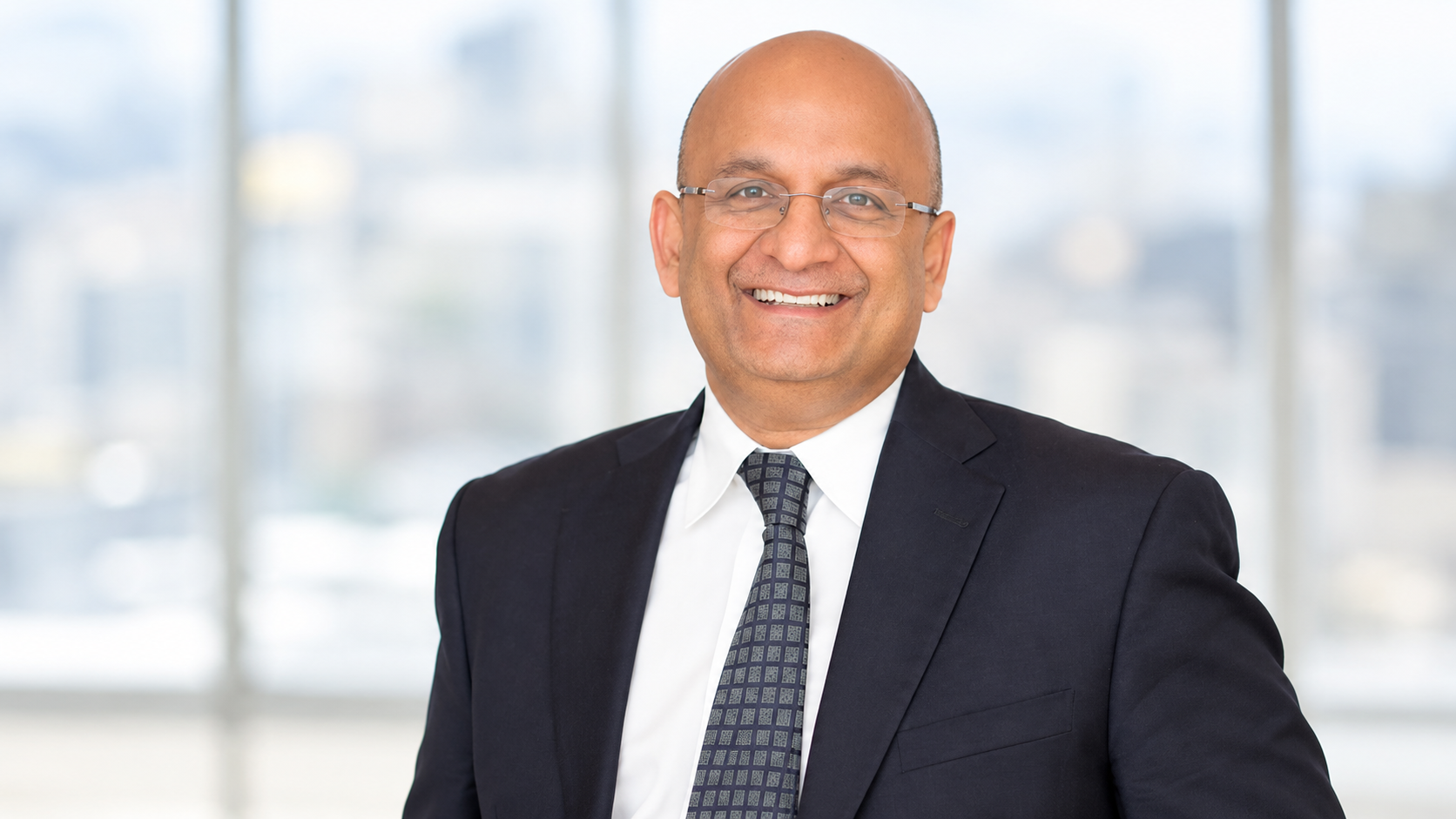
Nitin Nohria, a Harvard University Distinguished Service Professor and Partner and Executive Chairman at Thrive Capital, spent much of his career examining that reality. His central question was deceptively simple: What did a CEO actually do? After decades of teaching leadership, studying organisations and working with business leaders, Nohria reached a conclusion that challenged the conventional image of executive power. The most effective CEOs were not necessarily those who made the most decisions. Their deeper responsibility was to create an organisation in which other people could make exceptional decisions. “The job is about not direct authority, but indirect influence,” he explained.
That distinction reshaped the understanding of leadership. In Nohria’s conception, leadership was not primarily about standing at the top and issuing instructions. It was about designing the conditions beneath the top, strategy, culture, incentives, structures, relationships and expectations—so that thousands of people could move in the same direction with confidence. It was leadership by architecture rather than command.
Nohria’s fascination with CEOs began in childhood. His father had been a CEO, and as a young boy, Nohria would visit his office and wonder what his father actually did. That childhood curiosity became an academic and professional pursuit. At Harvard Business School, Nohria taught leadership for 22 years and later served as dean from 2010 to 2020. He subsequently became chairman at Thrive Capital and helped establish a programme for new CEOs. Over roughly three decades, he had the opportunity to work with more than 500 CEOs.
His book, The CEO, emerged from that lifetime of observation. It examined the mechanics, psychology and responsibilities of the person occupying the top seat. At its centre was a paradox: the CEO possessed enormous authority, but the effective use of that authority often required knowing when not to use it.
YOU CAN ALSO READ: Powering Lagos’ Next Economic Leap
A CEO could overrule an advertising campaign, reject a product, redirect an investment or change the direction of a division. But if every important decision travelled upward, the organisation would eventually grind to a halt. “If you start doing that, the whole organisation will come to a grinding halt,” Nohria observed. The solution was not to eliminate authority but to multiply its effect. A CEO needed to establish strategic direction, define organisational principles and create a culture in which employees understood how decisions should be made.
The objective was to build people capable of making decisions the CEO would support, even decisions the CEO had never personally considered. The CEO became less like a supreme commander and more like an architect, teacher and institutional designer. No CEO could simultaneously be the organisation’s finest scientist, marketer, engineer, financial expert and operations specialist. The CEO’s role was to assemble those capabilities, align them around a common purpose and create the environment in which talented people could perform at their highest level.
Nohria’s research suggested that the individual occupying the chief executive position mattered considerably. His analysis indicated that CEOs accounted for roughly 15 per cent of the variance in company performance over an extended period, roughly comparable to the contribution of industry. Leadership decisions accumulated. Strategy compounded. Culture compounded. Talent decisions compounded. Capital-allocation choices compounded. A CEO did not control every outcome, but accumulated choices could fundamentally alter an organisation’s trajectory.
The higher a leader rose, the more powerful the position appeared from the outside. Yet Nohria described the CEO role as uniquely lonely. Employees expected confidence. Investors wanted direction. Boards wanted assurance. But behind the polished presentation could be uncertainty, doubt and difficult choices that could not always be shared publicly. Nohria described this as the difference between the “front stage” and the “backstage” of leadership. On the front stage, the CEO represented the organisation; backstage, the CEO might have been wrestling with questions that had no obvious answers. That tension made trusted relationships indispensable.
Few things revealed a CEO’s priorities more honestly than the calendar. Nohria and Michael Porter spent years examining how CEOs actually used their time. In one study, approximately 30 CEOs had their activities tracked continuously over an entire quarter. The results frequently differed from what executives believed about their own schedules. The lesson was clear: what a CEO actually spent time doing could be more revealing than what the organisation’s strategy document said mattered.
Every constituency competed for the CEO’s attention. Investors wanted meetings. Customers wanted access. Employees wanted visibility. Board members demanded engagement. There were only 24 hours in a day, so the CEO had to decide what deserved attention and what did not. Perhaps most surprisingly, Nohria’s research found that CEOs spent only about 3 per cent of their time with customers. That mattered because customers were among the few constituencies willing to provide unfiltered feedback. Time with customers was therefore organisational reality testing.
Meetings also consumed substantial executive time. Nohria believed leaders had to be deliberate about their length and attendance. Too many participants could dilute accountability, while too few could produce incomplete decisions. Most importantly, participants should leave with clarity: what had been decided, what happened next, who owned the action and what remained unresolved.
Every CEO had priorities, but employees often struggled to identify them. Executives frequently confused priorities with preferences. A CEO could approve several initiatives and still call only a few strategic priorities. But if resources were spread thinly across everything, nothing was truly prioritised. For Nohria, the real test of priority was the willingness to say no.
During his tenure as dean, Nohria organised his agenda around five “I” priorities: innovation in educational programmes, intellectual ambition, internationalisation, inclusion and better integration with Harvard University. His colleagues eventually joked that he talked about the five “I’s” constantly. That repetition was intentional. Strategy became real when people knew what their leader consistently talked about, funded and protected—and what the leader repeatedly refused to pursue.
For a CEO, almost nothing was casual. A question about a project could signal strategic interest. A compliment about an employee could be interpreted as endorsement. The higher a person rose, the more their words were amplified. CEOs therefore had to communicate with extraordinary intentionality and repeatedly bring the organisation back to its central mission.
CEOs often imagined that their most consequential decisions involved acquisitions, capital expenditure or market expansion. Nohria argued that some of the most consequential decisions were about people. The Rob Parson case illustrated the dilemma. Parson was a highly successful performer who delivered remarkable results but created fear, violated organisational norms and generated cultural risk. The temptation was to retain him because the results appeared too valuable to lose. But people decisions communicated values.
The opposite problem was equally difficult. Some employees were deeply respected, loyal and beloved but had ceased to perform at the required level. These “saints” could be harder to remove because their departure generated sadness rather than relief. Yet every promotion, reward, dismissal and exception became part of the organisation’s cultural language. The CEO was therefore not merely managing people. The CEO was defining what the organisation believed.
Money mattered, but Nohria distinguished between incentives and motivation. His ABCD model described four fundamental drivers: acquisition, bonding, curiosity and comprehension, and defence. People wanted resources, status, recognition and advancement. They wanted belonging and meaningful relationships. They wanted stimulating work that satisfied curiosity and created understanding. They also wanted to know that the organisation would defend what mattered to them. People did not give their best solely because they were paid; they performed at a higher level when they felt respected, connected and engaged.
One of the hidden dangers of executive power was information distortion. Employees sometimes wanted to solve problems before taking them to the CEO. But good news travelled upward quickly while bad news moved slowly. Eventually, a CEO could occupy a comfortable position inside an organisation becoming increasingly disconnected from reality. Nohria suggested that CEOs should be concerned if they went too long without hearing something that disappointed, challenged or worried them. If the CEO never heard about problems, it could mean the truth had stopped travelling.
That was why trusted advisers mattered. A chief of staff, general counsel, senior adviser or experienced executive could provide something more valuable than agreement: perspective. The most useful relationship was built around loyalty to the institution rather than personal loyalty to the CEO.
A CEO had to deliver results. Without results, confidence from shareholders, boards, employees and other stakeholders eventually weakened. But Nohria distinguished performance from legitimacy. Performance allowed a CEO to retain the position. Legitimacy made people want to follow the person holding it. It emerged when employees regarded their leader as fair, authentic, human and genuinely concerned about the people around them. People might eventually forget specific decisions, but they rarely forgot how a leader made them feel.
Nohria’s analysis of CEOs who remained in office for eight years or longer found that, on average, company performance was stronger during the first half of their tenure than during the second. For him, that reinforced the importance of succession and graceful departure. Strong leaders understood that leadership was temporary. They did not build organisations that depended indefinitely on their presence. They built institutions capable of continuing without them.
YOU CAN ALSO READ: Udeme Ufot Pushes for Policies That Translate Into Measurable Inclusion
Ultimately, Nohria’s conception of the CEO was far removed from the mythology of the powerful executive. The CEO was not simply the person with the largest office, final signature or loudest voice in the boardroom. The CEO was the architect of the environment in which thousands of other people made decisions.
The role demanded influence rather than omnipotence, judgment rather than constant intervention, listening as much as speaking, and the discipline to establish priorities while resisting distractions. The greatest CEO did not create an organisation that constantly waited for instructions from the top. The greatest CEO created an organisation that could think, decide and act intelligently without requiring permission for every move.
That was the paradox at the heart of executive leadership. The true measure of a CEO’s power was not how many decisions depended on the leader. It was how effectively that leader had built an organisation in which other people could make decisions. The CEO’s legacy was not the number of decisions made, but the quality of decisions the organisation continued to make after the CEO was no longer in the room.