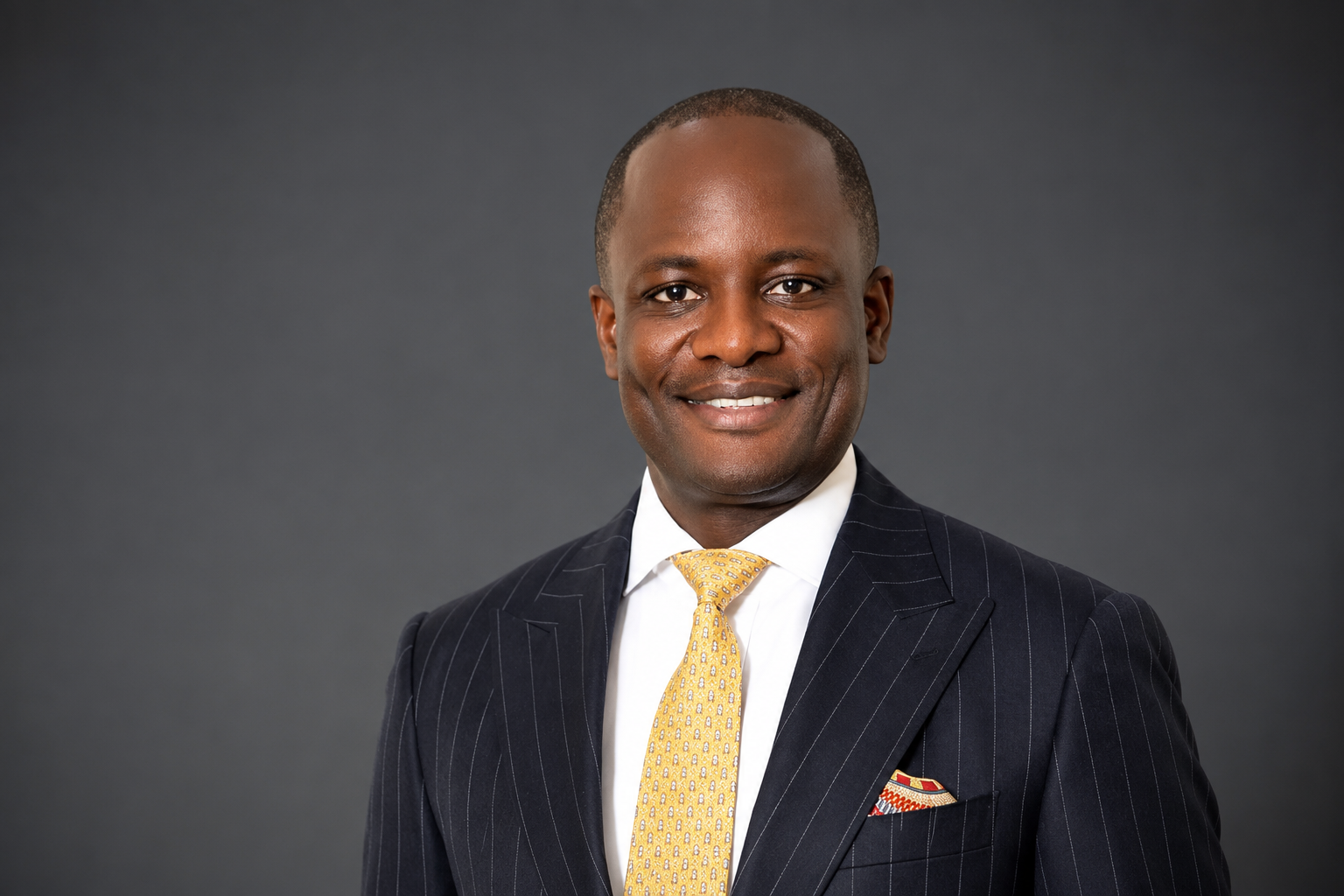
Group Managing Director and Chief Executive Officer of Nigerian Exchange Group (NGX Group), Temi Popoola has outlined an ambitious vision to position Nigeria’s capital market as a globally competitive financial marketplace, leveraging the country’s youthful population, entrepreneurial culture, established businesses and emerging industries.
Popoola said the ambition was to move beyond viewing the Nigerian Exchange solely as a domestic market and instead build an institution capable of competing with leading exchanges across Africa and the wider global financial system.
According to him, Nigeria has the underlying strengths required to achieve that ambition, particularly its large and youthful population, entrepreneurial energy and strong cultural influence.
“We’re going to play on our strengths,” Popoola said, pointing to Nigeria’s youthful and upwardly mobile population as one of the country’s biggest assets.
YOU CAN ALSO READ: Nigerian Graduates Need Skills, Not Just Degrees, Says Jobberman
He said the entrepreneurial character of Nigerians represented a significant opportunity for the capital market, particularly as more young people seek ways to build wealth and participate in investment.
For Popoola, building a globally competitive exchange also requires strengthening the connection between companies seeking capital and investors looking for opportunities to grow their wealth.
He described the opportunity as a supply-and-demand equation, with a growing pool of established Nigerian businesses capable of raising capital through the exchange and a large population of investors willing to back those businesses.
“A supply of very good companies that want to raise capital on the exchange and a demand from people who want to support those businesses,” he said.
Popoola also identified creativity and ingenuity as critical components of Nigeria’s competitive advantage.
He argued that the capital market must find ways to leverage Nigeria’s culture and growing global influence, creating stronger connections between the country’s creative economy, businesses and financial markets.
The NGX Group chief executive said this approach would help the Nigerian market develop products and opportunities that reflect the country’s unique economic and cultural strengths while making it more attractive to global investors.
He also pointed to emerging sectors that could shape the next phase of Nigeria’s economic development. Artificial intelligence, energy, food security and agriculture were among the areas he identified as having significant potential.
“Artificial intelligence is definitely a path for the future,” Popoola said, while also highlighting sectors linked to Nigeria’s long-term needs, including energy sufficiency and food production.
He described agriculture as “really the next frontier,” suggesting that capital markets could play an important role in financing businesses operating across critical areas of the agricultural value chain.
Popoola’s vision reflects a broader strategy of positioning NGX as an engine for capital formation, investment and economic growth, rather than simply a platform for buying and selling securities.
His own international career has also shaped his perspective. After studying in Nigeria, he received a scholarship to the Massachusetts Institute of Technology, began his studies in chemical engineering and later moved into finance. He subsequently worked on Wall Street trading derivatives before returning to Nigeria and building a career in the financial markets.
YOU CAN ALSO READ: Fix Management, Not Just Machines, to Revive Nigeria’s Refineries – Sowunmi
Now leading NGX Group, Popoola said the ambition was to harness Nigeria’s existing strengths and connect them with the sophistication, innovation and global orientation required to compete internationally.
For Nigeria, achieving that ambition could mean a deeper and more efficient capital market capable of attracting international capital, supporting high-growth businesses and giving domestic investors greater opportunities to participate in wealth creation.
Popoola’s message to the younger generation was equally tied to this broader vision. He urged Nigerians to invest, develop a long-term mindset and recognise their ability to adapt and create new possibilities.
He cited neuroplasticity as an example of the capacity for continuous development, arguing that people could train themselves to achieve more when they combined agency with optimism, imagination and a willingness to act.
For NGX Group, the goal is therefore not simply to become a larger African exchange, but to build a globally competitive Nigerian capital market that reflects the scale, ambition and entrepreneurial potential of the country it serves.