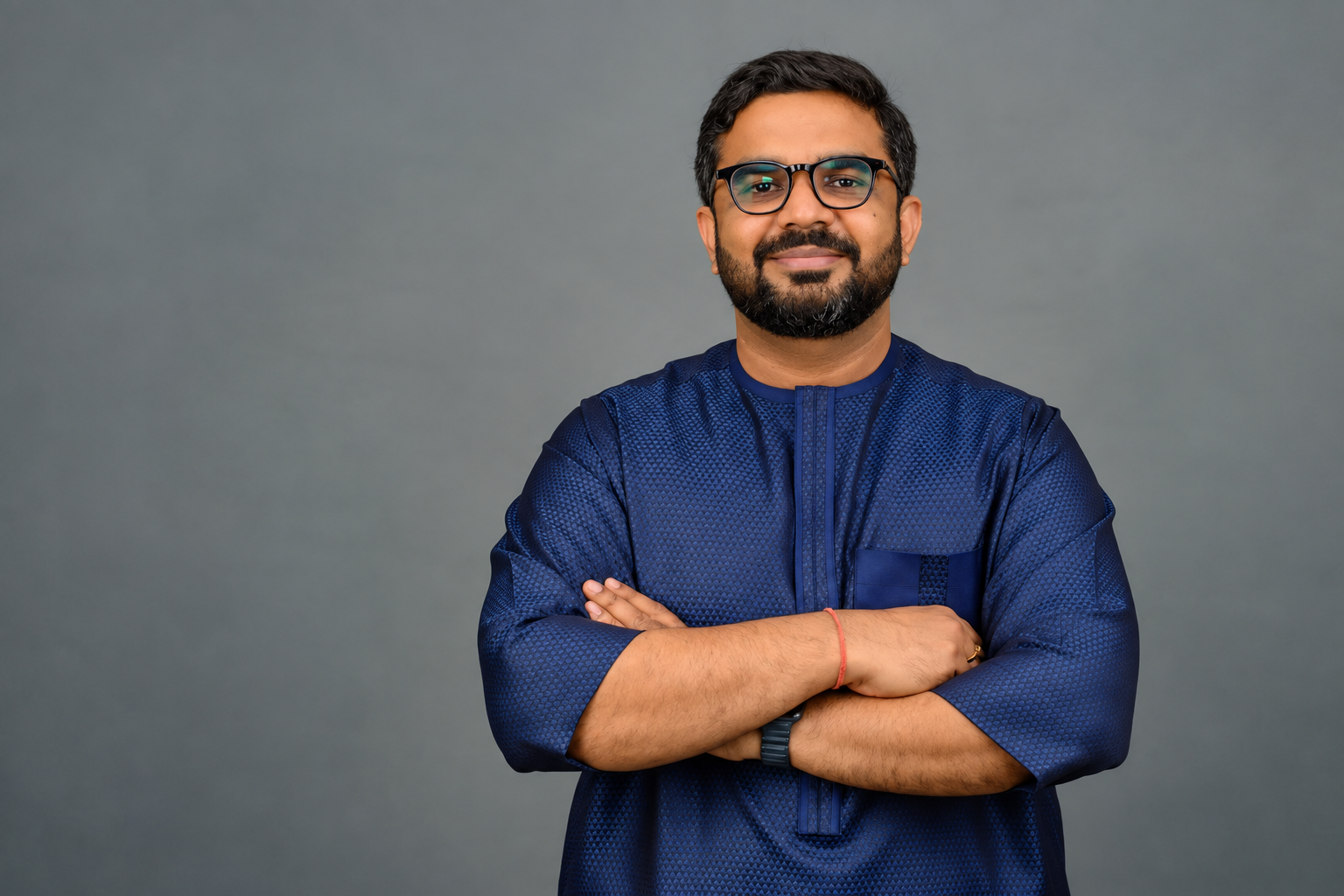
At 33, many entrepreneurs are still searching for their breakthrough moment. For John Adedamola Alamu, the breakthrough became a movement, one built not on perfect grades, privileged access, or a flawless roadmap, but on resilience, audacity, and a willingness to start before feeling ready. Today, the founder and Group Managing Director of CapitalSage Holdings oversees a growing conglomerate spanning fintech, agribusiness, manufacturing, and healthcare, while attracting over $200 million in local and foreign investment. Yet the road to building one of Nigeria’s most ambitious multi sector businesses began with a third class degree, a disappointing JAMB score, and a string of early setbacks that could easily have ended the story before it began.
For many Nigerians, academic achievement often becomes society’s first measure of future success. Alamu’s story challenged that script from the beginning. Growing up in Ibadan as the eldest of three children to civil servant parents, life revolved around modest ambition and disciplined hard work. His father worked as an immigration officer while his mother taught in school, but like many Nigerian families, government salaries alone were not enough. Side hustles became survival strategies. His mother sold clothes; his parents eventually established a cybercafé business called Jomark, an acronym built from family names, which unknowingly became the first classroom in Alamu’s entrepreneurial education.
Long before he built boardrooms and negotiated international financing, he sold recharge cards, processed examination registrations, and checked results for customers. Ironically, one of the most difficult moments came when he had to check his own JAMB result. He scored 171, a result that narrowly crossed the admission benchmark. The relief was temporary. Because he entered university young, he was pushed into pre degree studies and failed. Then came another setback: he eventually graduated with a third class degree, one he jokingly admits was not even a “strong” third class.
YOU CAN ALSO READ: How a Friendsgiving Experiment Sparked a $3 Million Ice Cream Brand
For many, such outcomes become permanent labels. For Alamu, they became fuel.
Rather than allowing academic disappointments define him, he entered the workforce and began learning where classrooms had stopped teaching. During his National Youth Service year, he was retained and worked in agricultural development, moving from administrative roles into field research and farmer engagement. He travelled extensively, listening to farmers and understanding firsthand the challenges within Nigeria’s agricultural value chain. Those experiences planted seeds that would later shape much larger ambitions.
His first entrepreneurial attempt, however, looked nothing like the billion dollar visions people now associate with his name. Convinced that mobile technology could transform farming, he designed a subscription service that would send agricultural information to farmers through telecom platforms. On paper, the mathematics looked beautiful: millions of farmers paying small fees could create enormous revenue. Reality was less generous. Telecom partnerships proved inaccessible and farmers showed little interest in paying for such services. The idea collapsed.
But Alamu did what many successful founders eventually learn. He pivoted.
He moved into agricultural consulting, supplying hybrid seedlings and farming inputs. Buying and selling became his first real revenue engine. He sourced agricultural products and sold to NGOs and institutions, slowly building networks and trust. Trade evolved into farmer training. Farmer training evolved into financing. Financing evolved into lending. And lending eventually evolved into something far bigger, a structured financial services ecosystem.
What started as small lending operations expanded into a broader financial enterprise that later transformed into fintech businesses operating across multiple markets. Today, the financial arm of his ecosystem includes operations in Nigeria and The Gambia, with licenses and strategic expansion extending into the United Kingdom and the United Arab Emirates.
Still, perhaps the boldest chapter in Alamu’s journey arrived through what seemed like a routine business meeting.
In 2021, while attempting to sell fintech products to a cooperative group in Akure, he heard about an old, inactive manufacturing facility available for sale. The factory was massive but neglected. Roads around it had deteriorated and the operation had gone dormant. Most people would have seen decay. Alamu saw possibility.
He had no experience in cocoa processing or manufacturing. He also did not possess the capital required to build a plant of that scale from scratch. Yet standing at the gates of the facility, a thought emerged: instead of finding a buyer, why not become one? That decision would redefine everything.
Rather than raising billions to build a new facility, Alamu pursued an acquisition strategy built around distressed and underutilized assets. Through structured payment arrangements and strategic relationships, he acquired and revived the factory. Recognizing his limitations, he immediately sought expertise, requesting access to the engineer who originally built the plant. That decision reflected a recurring pattern in his story: confidence never prevented humility.
The acquisition transformed into one of Nigeria’s most significant cocoa processing and export operations, creating a foundation that attracted serious institutional attention. Soon global financial institutions began to notice.
Organizations including the International Finance Corporation, World Bank, British International Investment, and African Export-Import Bank became part of a growing ecosystem of investors and partners supporting the company’s expansion. Together, these relationships helped attract more than $200 million into Ondo State and into the businesses under his leadership. Yet Alamu insists the process was never glamorous.
Raising capital, he says, was painful, expensive, and deeply difficult in the early years. Unknown founders pay heavy premiums because risk comes at a price. Investors hesitate. Trust is scarce. And for Nigerian entrepreneurs, international fundraising often carries another invisible burden: skepticism. “The fact that you are Nigerian is already minus one,” he observed candidly.
YOU CAN ALSO READ: ‘There Are Thousands of Burna Boys in Lagos Waiting to Be Discovered’ – Sanwo-Olu
Rather than fight perception with promises, Alamu focused on structure. He strengthened corporate governance, improved accounting systems, brought experts into the business, and welcomed institutional scrutiny. International lenders did not find perfection; they found transparency and a founder willing to adapt. That openness became a competitive advantage.
As larger institutions came onboard, credibility followed. And in business, credibility often attracts capital faster than ambition alone.
Perhaps the most compelling part of Alamu’s story is not the money raised or factories acquired. It is his refusal to romanticize success. He openly discusses failure, poor academic performance, expensive mistakes, and uncertainty. In a startup culture increasingly obsessed with polished narratives and overnight victories, his story offers a different blueprint: imperfect beginnings do not prevent extraordinary outcomes.
For young Nigerians staring at disappointing grades, failed examinations, or uncertain futures, Alamu’s journey delivers a message that classrooms rarely teach: success does not always emerge from straight lines.