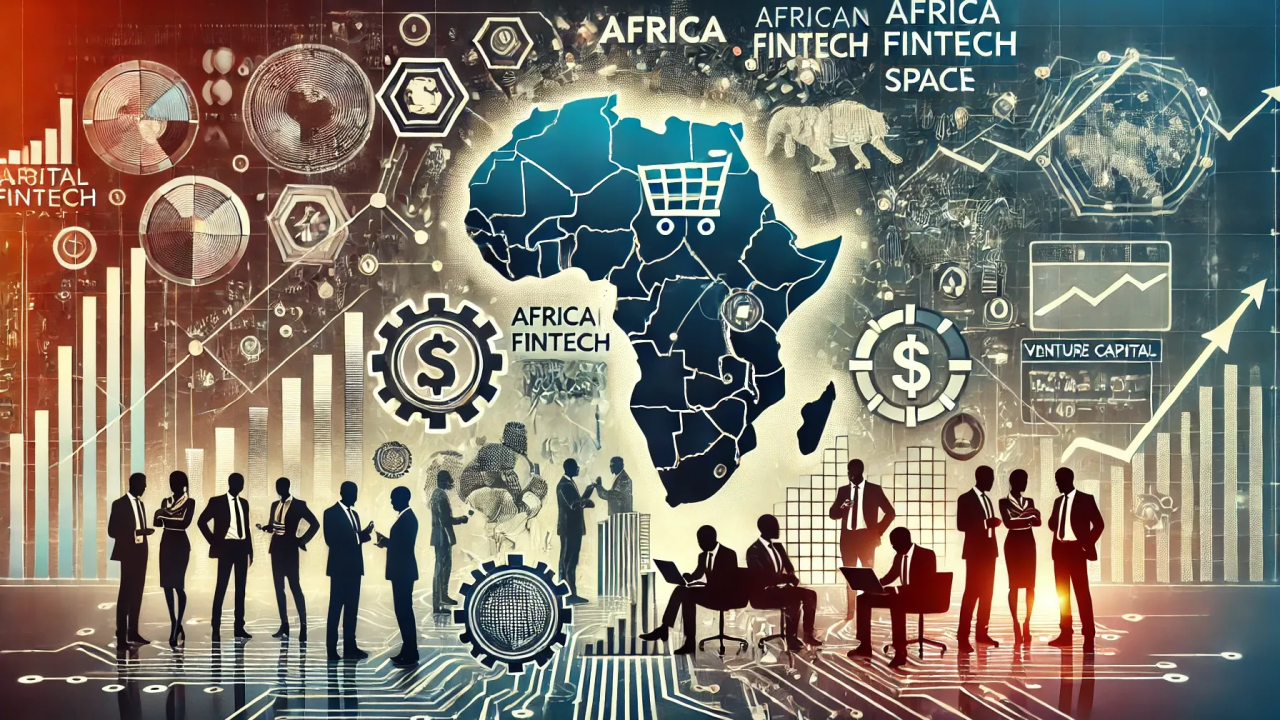
For years, global innovation conversations have revolved around Silicon Valley, Beijing, London, and a handful of established technology hubs. Yet beneath the headlines and outside the spotlight, another remarkable transformation has been taking shape. Africa’s startup ecosystem, long underestimated and frequently overlooked, is emerging as one of the most important growth stories in the global digital economy.
This is not a movement powered by viral apps or technology trends chasing attention. It is a revolution rooted in necessity, infrastructure, and businesses solving some of the continent’s most pressing structural challenges. More importantly, the scale of the opportunity is becoming increasingly difficult to ignore.
YOU CAN ALSO READ: Otedola Backs Dangote Refinery with $100 Million in Landmark Investment Move
Nigeria has become the center of Africa’s fintech surge, producing a new generation of billion dollar companies reshaping how millions of people send money, save, make payments, and access financial services. Companies like Flutterwave, valued at approximately $5.2 billion, OPay at $2.8 billion, and both Moniepoint and Interswitch, each valued at $1 billion, have positioned Nigeria as the dominant force in African fintech. Yet the broader story stretches beyond Nigeria.
South Africa continues to lead Africa in total market value, supported largely by major corporate players such as Naspers, whose valuation of more than $43 billion remains one of the continent’s most significant technology success stories.
Combined, Africa’s leading unicorns now command an estimated valuation exceeding $61 billion. But perhaps the most compelling aspect of this growth story is not the size of the numbers. It is the nature of the businesses driving them.
Around the world, startup ecosystems have often been built around convenience platforms and consumer trends. Africa’s most successful companies have followed a different path. They are building financial rails, payment systems, merchant ecosystems, digital banking tools, and infrastructure that millions rely on daily. Africa is building financial infrastructure in real time.
| Rank | Company | HQ | Valuation | Ownership |
|---|---|---|---|---|
| 1 | Naspers | 🇿🇦 South Africa | $43.2B | Public |
| 2 | Flutterwave | 🇳🇬 Nigeria | $5.2B | Private |
| 3 | OPay | 🇳🇬 Nigeria | $2.8B | Private |
| 4 | Wave | 🇸🇳 Senegal | $1.7B | Private |
| 5 | Tyme Group | 🇿🇦 South Africa | $1.5B | Private |
| 6 | Andela | 🇳🇬 Nigeria | $1.5B | Private |
| 7 | Fawry | 🇪🇬 Egypt | $1.4B | Public |
| 8 | Datatec | 🇿🇦 South Africa | $1.2B | Public |
| 9 | WeBuyCars | 🇿🇦 South Africa | $1.1B | Public |
| 10 | Interswitch | 🇳🇬 Nigeria | $1.0B | Private |
| 11 | MNT-Halan | 🇪🇬 Egypt | $1.0B | Private |
| 12 | Moniepoint | 🇳🇬 Nigeria | $1.0B | Private |
Unlike developed markets with deeply entrenched banking systems and decades of legacy financial structures, many African economies have had the chance and the necessity to leapfrog traditional models entirely. Mobile devices evolved into financial tools. Digital wallets became banking channels. Technology stepped in to solve problems traditional systems struggled to address.
Several factors continue to accelerate this transformation including mobile first economies, large underbanked populations, substantial remittance flows, and weak legacy banking systems. Across many parts of the continent, innovation has not been driven by convenience. It has been driven by necessity. Necessity often creates the strongest companies.
The next phase of growth may already be emerging. Stablecoins, cross border payment systems, and crypto powered financial rails are increasingly being viewed as Africa’s next major frontier. As commerce expands and regional trade deepens, seamless movement of money across borders could unlock enormous economic value.
YOU CAN ALSO READ: The Future Arrived Faster Than Expected: Jensen Huang on AI’s New Computing Explosion
History repeatedly shows that regions forced to innovate under pressure often adapt faster than those constrained by old systems. Markets with fewer legacy structures frequently build new models with greater speed and flexibility.
Africa’s startup ecosystem may still carry the label of being underrated, but that description becomes less accurate with every passing year. Beneath the surface, a generation of entrepreneurs and builders is redesigning financial access for hundreds of millions of people and creating businesses that may shape the future of global commerce.