As global investors pour trillions into artificial intelligence, the Founder and Chief Investment Officer of Zrosk Investment Management believes Africa may be sitting on one of the most overlooked investment opportunities of the century.
The world is witnessing one of the greatest reallocations of capital in modern economic history. From artificial intelligence to space exploration, institutional investors are pouring unprecedented amounts of money into a handful of mega-cap companies that promise to define the future of humanity.
Every week, new valuations shatter old records, billion-dollar funding rounds become commonplace and technology companies increasingly command market capitalisations that rival the economies of entire nations. Yet beneath the excitement, a fundamental question is emerging: Is the world creating sustainable value, or simply inflating paper wealth?
YOU CAN ALSO READ: Why Vusi Thembekwayo Believes Dialogue Is Africa’s Greatest Untapped Resource
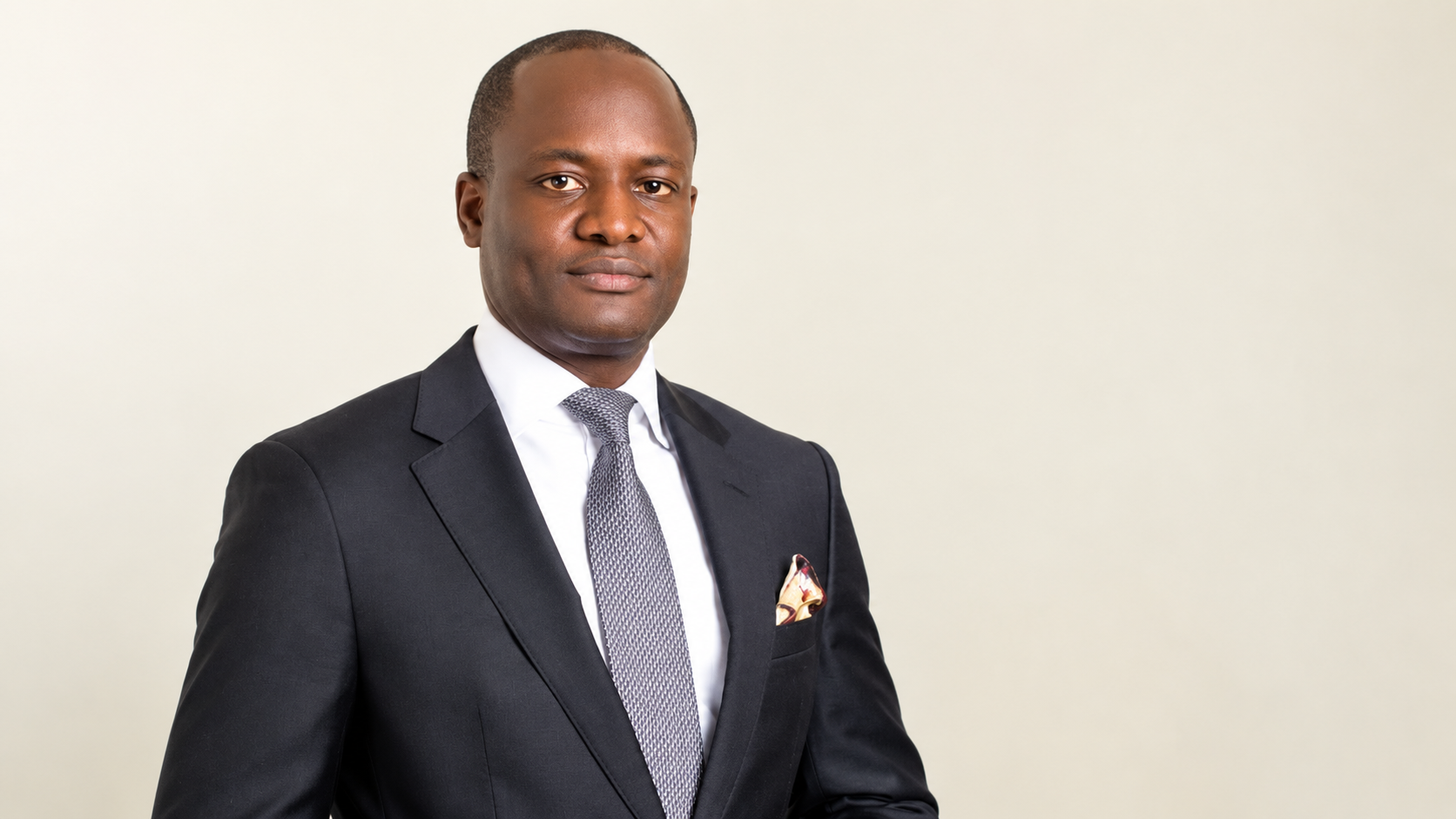
For the Founder and Chief Investment Officer of Zrosk Investment Management, Samson Esemuede, the answer lies somewhere in between. Speaking during an interview on Arise News’ Business Week, Esemuede offered a sobering analysis of today’s investment landscape, warning that the global economy may be approaching a dangerous inflection point where market valuations are racing far ahead of the economic fundamentals required to sustain them. His concerns are not rooted in scepticism about technology itself. Rather, they stem from a growing disconnect between wealth creation and real-world cash flows.
Drawing attention to the explosive rise in the valuation of technology companies, he noted that trillions of dollars in paper wealth have been created in recent years without a corresponding expansion in underlying economic output. For Esemuede, paper wealth becomes problematic the moment investors seek to convert those valuations into liquidity. As long as assets remain on paper, markets can continue expanding indefinitely. The danger emerges when a large number of investors simultaneously decide to cash out, exposing a shortage of underlying value to support those expectations. That vulnerability, he argues, is becoming increasingly visible as massive IPOs and private market listings continue to absorb substantial amounts of real liquidity.
Yet his analysis is far from apocalyptic. Artificial intelligence, he insists, is not a speculative illusion. The technology possesses undeniable utility and transformative potential. In fact, he describes humanity’s mastery of language as one of the defining reasons civilisation has been able to flourish. Today, machines are beginning to understand language in ways that were once exclusively human, opening extraordinary possibilities across industries. But he also raises an important question: Is the utility of artificial intelligence large enough to justify the enormous scale of capital being deployed into the sector?
That question sits at the heart of his investment thesis. The world, particularly the United States, has made an unprecedented wager on artificial intelligence, committing trillions of dollars to data centres, energy infrastructure, cooling systems and advanced computing hardware. Yet these systems consume vast amounts of energy and still exhibit significant reliability limitations. Unlike the human brain, which operates with remarkable energy efficiency, AI systems require enormous computational resources to perform tasks that often still require human oversight and validation. From medicine to engineering and other mission-critical sectors, Esemuede believes AI remains far from autonomous. Human expertise, judgement and reliability checks remain indispensable.
Consequently, he cautions that the world may be witnessing one of the biggest capital allocation experiments in modern economic history. However, what many perceive as a challenge, he sees as Africa’s greatest opportunity. As software becomes increasingly dependent on hardware, and hardware depends on natural resources, emerging economies suddenly occupy a far more strategic position within the global value chain. Artificial intelligence cannot exist without energy, copper, water systems, minerals and industrial infrastructure. Many of these resources are abundant across Africa.
Countries such as Nigeria possess enormous reservoirs of the raw materials required to support the global AI revolution. The challenge, according to Esemuede, has never been resource availability. It has always been value creation. For decades, African economies have struggled to translate natural wealth into widespread prosperity. Too often, the benefits of commodity booms have remained concentrated within narrow sectors of the economy without being recycled into sustainable economic growth. That cycle, he believes, must now be broken.
The real opportunity lies in building the institutions capable of transforming resources into long-term value. Financial systems, insurance industries, capital markets and infrastructure networks will all play decisive roles in ensuring Africa captures a meaningful share of this emerging economic era. This is not merely an economic opportunity. It is a generational one.
Closer to home, Esemuede also sees reasons for optimism within Nigeria’s capital markets. Despite recent market pullbacks and investor uncertainty surrounding regulatory changes, he maintains that the underlying fundamentals remain strong. In his assessment, many of the current pressures are technical rather than structural. He points to improvements in banking sector balance sheets, stronger earnings quality and a relatively stable macroeconomic environment as indicators that Nigeria’s long-term investment case remains intact. Indeed, he argues that Nigerian equities continue to trade at substantial discounts relative to their emerging market peers, creating compelling opportunities for patient investors.
His investment philosophy is equally pragmatic when it comes to entrepreneurship. The era of hype-driven valuations, he says, is over. Founders can no longer rely solely on ambitious narratives to secure capital. Investors are now demanding stronger fundamentals, clearer business models and realistic valuation expectations. This reset, he believes, is ultimately healthy for Africa’s startup ecosystem. Rather than chasing inflated valuations disconnected from reality, entrepreneurs are being encouraged to build sustainable businesses grounded in real customer demand and measurable economic value.
YOU CAN ALSO READ: Aliko Dangote’s Vision for a New Industrial Africa
Throughout the conversation, one theme remained consistent: ignore the noise and focus on the fundamentals. Markets will always be influenced by psychology. Trends will rise and fall. Narratives will evolve. But lasting value, Esemuede argues, is built on tangible assets, resilient institutions and disciplined execution.
In a world increasingly captivated by artificial intelligence and speculative enthusiasm, his message is remarkably simple. Africa should not spend its energy chasing every global trend. Instead, it should recognise that many of the building blocks powering tomorrow’s economy already exist beneath its feet. The future may be digital, but its foundations remain profoundly physical. And if Africa can finally translate its abundant resources into productive value, the continent may emerge not as a spectator of the artificial intelligence revolution, but as one of its greatest beneficiaries.