As Nigeria’s energy industry positions itself for a new era of investment and growth, the Nigerian Content Development and Monitoring Board (NCDMB) has reaffirmed that building competent people, strengthening compliance, and accelerating project execution remain central to sustaining the country’s local content success.
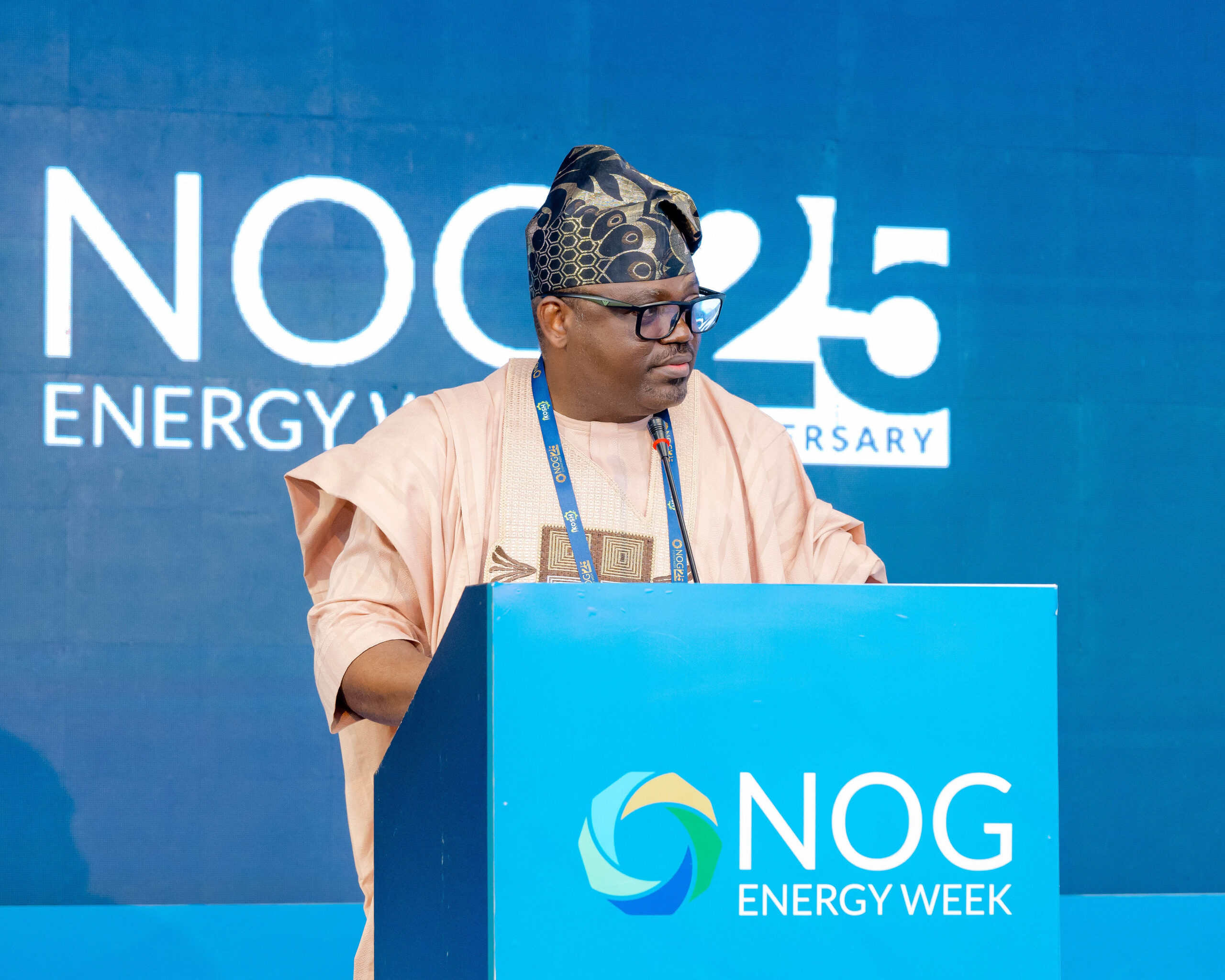
Delivering the keynote address on behalf of the Executive Secretary of NCDMB, Felix Omatsola Ogbe, at one of Africa’s foremost oil, gas and energy strategic conferences, Director of Capacity Building at the Board, Engr. Abayomi Bamidele. He outlined an ambitious vision that places human capital development at the heart of Nigeria’s energy transformation.
Addressing an audience of global energy leaders, policymakers, investors and innovators gathered to discuss solutions for the future of Africa’s energy sector, Bamidele said the Board’s capacity development strategy goes beyond regulatory compliance to building a sustainable ecosystem of expertise capable of supporting long-term industry growth.
YOU CAN ALSO READ: Aliko Dangote’s Master Plan to Make Africa a Global Industrial Power
A major highlight of his address was the Rollout Initiative, which he described as a strategic programme designed to deepen local content implementation by equipping organisations with professionals who understand both regulatory obligations and global industry standards.
According to him, the initiative will provide specialised training in areas including ISO certification, quality management, statutory reporting, compliance processes and other regulatory requirements, enabling companies to develop internal competence rather than relying solely on external consultants.
He noted that many organisations continue to receive compliance queries and experience unnecessary delays because employees are unfamiliar with regulatory expectations.
“Our objective is to ensure that when organisations send their staff to our academy, they return with the knowledge required to implement the right processes and prevent avoidable compliance violations,” he said.
Bamidele encouraged compliance officers, contract personnel and subject matter experts across the industry to participate actively in the programme, explaining that NCDMB would publish an annual catalogue of professional development courses, allowing companies to plan and nominate staff for certification programmes and other business-focused training delivered through the Board’s academy in Yenagoa and other approved locations.
He stressed that capacity development is not limited to industry participants alone. NCDMB, he said, is equally investing heavily in developing its own workforce to ensure that the organisation remains equipped to support an increasingly sophisticated energy sector.
Highlighting the Board’s commitment to leadership succession, Bamidele pointed to the emergence of young professionals within NCDMB who are already assuming visible leadership responsibilities, describing them as the next generation of experts who will shape the future of Nigerian content development.
Beyond skills development, he called on operators to embrace proactive compliance with the Nigerian Content Development Fund (NCDF), reminding stakeholders that timely contributions remain critical to financing industry development initiatives.
He unveiled the Board’s digital NCDF Compliance Certificate platform, describing it as a simple online tool that allows companies to meet their obligations without unnecessary delays.
Bamidele cautioned organisations against waiting for enforcement actions before addressing compliance responsibilities, noting that many companies have previously faced unexpected financial obligations because they failed to budget adequately for statutory contributions.
He revealed that the compliance certificate would increasingly become an important requirement for accessing certain industry services, urging operators to integrate compliance into their routine business processes rather than treating it as a last-minute exercise.
While compliance and capacity building remain essential, Bamidele argued that neither can succeed without sustained investment across the energy industry.
“The future of local content growth is closely tied to the future of project development,” he declared, repeating the Board’s now familiar message: “No projects, no local content.”
He explained that every sanctioned project creates new opportunities for Nigerian manufacturers, service providers, engineers, contractors, communities and the wider economy, while delays in project execution inevitably slow the growth of indigenous capacity.
According to him, manufacturing investments cannot be justified without market demand, while skills development only becomes meaningful when professionals have projects on which to apply their expertise.
To reinforce this message, Bamidele proposed the establishment of an annual “Final Investment Decision (FID) Day” during major industry events such as NOG Energy Week and the Nigeria International Energy Summit (NIES), where projects reaching Final Investment Decision would be formally recognised and celebrated.
Such recognition, he argued, would encourage investors, regulators and project partners to move beyond approvals and ensure projects proceed to execution.
He observed that while regulatory agencies often work hard to complete approvals within agreed timelines, some projects continue to experience delays after receiving regulatory clearance, limiting the economic benefits they could generate.
Calling for stronger collaboration between regulators and investors, he said project delivery should become a shared responsibility across the industry.
Bamidele also noted growing international interest in Nigeria’s energy sector despite continuing geopolitical uncertainties affecting global energy markets.
Drawing lessons from recent global events, including disruptions caused by the Russia-Ukraine conflict and tensions in the Middle East, he observed that international investors increasingly recognise that every producing region presents unique opportunities and challenges.
Rather than viewing Nigeria’s operating environment as exceptional, many investors now understand that energy development anywhere in the world requires managing different forms of risk.
YOU CAN ALSO READ: Honeywell Group Acquires 14.12% Stake in Ikeja Hotel in Strategic Hospitality Investment
He assured stakeholders that NCDMB remains committed to creating an enabling environment where businesses can succeed.
“The ‘D’ in NCDMB stands for Development,” he said. “Our responsibility is not simply to regulate but to develop people, businesses and assets. We are here to help businesses grow, support investors and ensure that Nigerian companies continue to expand their capabilities.”
He concluded by reaffirming the Board’s commitment to promoting investment, strengthening local capacity and ensuring that Nigerian content remains a key driver of economic growth as the country’s energy industry enters its next phase of development.
For industry stakeholders, Bamidele’s message was clear: sustainable local content will not be driven by regulation alone. It will depend on competent people, stronger compliance, faster investment decisions and a continuous pipeline of projects capable of transforming Nigeria’s industrial and economic landscape.