As global economic uncertainty deepens and geopolitical tensions continue to reshape international trade, Africa faces a defining moment. While many economies are grappling with slowing growth, rising protectionism and volatile capital flows, the continent has an opportunity not merely to weather the storm but to reposition itself as a stronger player in the evolving global economy.
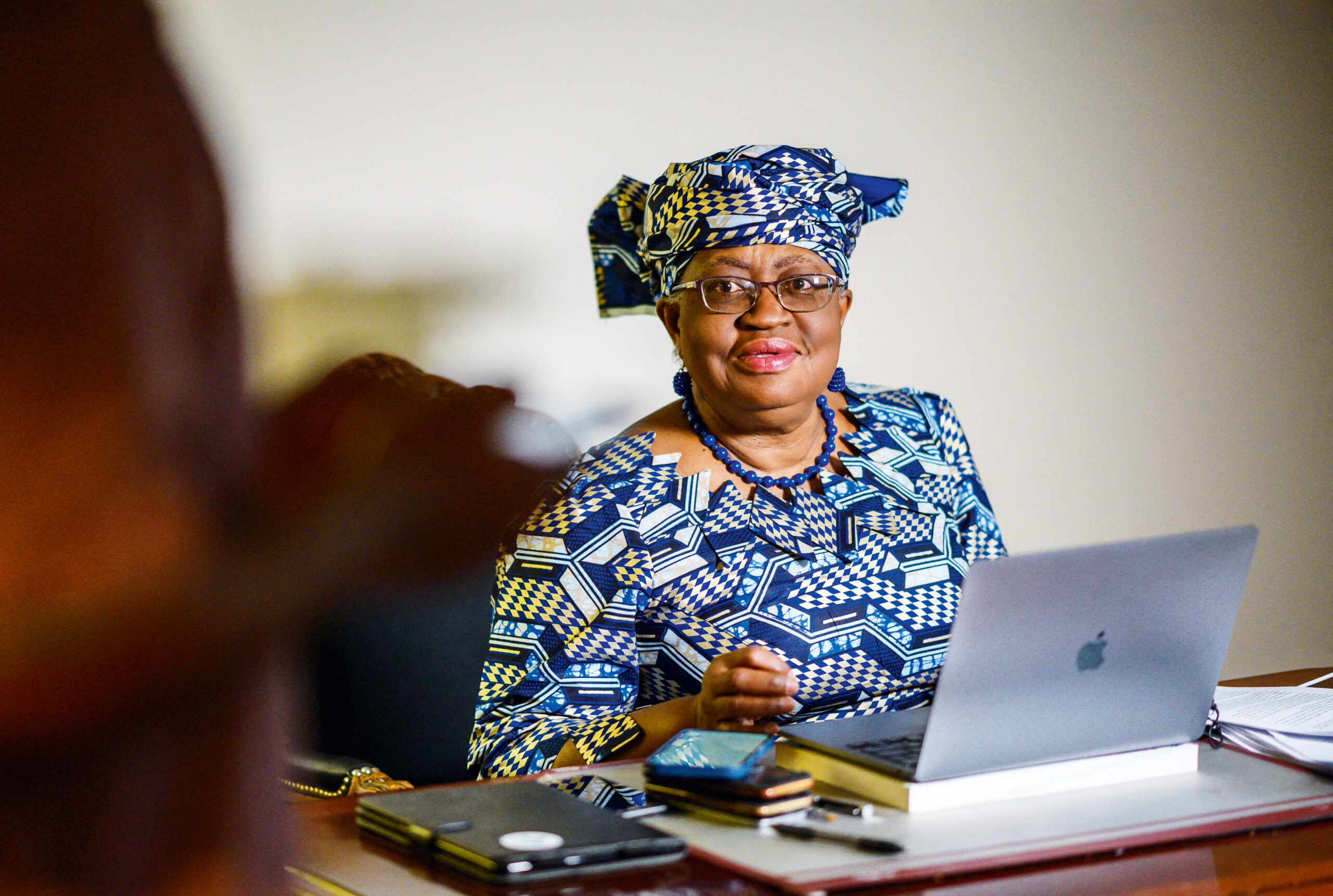
That was the central message delivered by World Trade Organization (WTO) Director-General, Ngozi Okonjo-Iweala, as policymakers, central bank governors, finance ministers, development partners and business leaders gathered in Abuja for the 7th Africa Emerging Markets Forum.
The two-day forum, hosted by the Central Bank of Nigeria (CBN) in collaboration with the Emerging Markets Forum and the Centre for the Study of the Economies of Africa (CSEA), comes at a critical time for African economies. Governments across the continent are simultaneously confronting persistent inflation, tightening global financial conditions, rising debt burdens, declining development assistance and increasing uncertainty in international trade.
Against this backdrop, the forum sought to answer one pressing question: how can African economies build resilience in an increasingly fragmented global environment? For Okonjo-Iweala, the answer begins with changing the narrative.
YOU CAN ALSO READ: $1 Trillion Nigerian Economy Is Achievable, Dangote Declares, Targets $100bn Contribution
Describing the current global environment as one of profound transformation, she argued that the world is not witnessing the collapse of globalization, as many fear, but rather its evolution into what she called “competitive interdependence.”
The post-World War II global economic order, built around institutions such as the United Nations, the World Bank, the International Monetary Fund and the WTO, is undoubtedly under immense pressure. Yet despite growing geopolitical rivalries and economic nationalism, countries remain deeply interconnected through trade, investment and global supply chains.
“The world is not becoming less interdependent,” she observed. “States compete vigorously, but within a global economic system they cannot afford to abandon.”
According to the WTO chief, this distinction is important because it means Africa should resist the temptation to retreat from global markets. Instead, the continent should seize the opportunities emerging from changing global supply chains.
Global trade, she noted, has proven remarkably resilient despite recent disruptions. The COVID-19 pandemic, the war in Ukraine, supply chain bottlenecks, conflicts affecting major shipping routes and rising trade tensions have all tested the international trading system. Yet global trade in goods and services reached a record $34.65 trillion in 2025, representing a seven per cent increase over the previous year. Merchandise trade volumes grew by 4.6 per cent, while services trade expanded by 5.3 per cent, with digitally delivered services recording even stronger growth.
These figures, Okonjo-Iweala argued, demonstrate that while global trade is under pressure, it remains remarkably durable. She also challenged the widespread belief that international trade is primarily responsible for widening inequality and job losses across many economies.
Automation, technological disruption, domestic tax systems and labour market policies, she argued, have had a far greater impact on employment than trade itself. Governments, she said, must therefore focus on strengthening social protection systems, investing in workforce development and implementing policies that enable citizens to adapt to technological change rather than blaming global trade for domestic economic challenges.
Perhaps her strongest message to African policymakers was that the continent should see today’s geopolitical uncertainty as an opportunity rather than a crisis.
As companies around the world seek to diversify supply chains and reduce dependence on a limited number of production centres, Africa has an unprecedented opportunity to attract new investment. Businesses increasingly want to spread manufacturing, sourcing and logistics across multiple regions to reduce exposure to geopolitical risks.
This trend, she explained, creates an opening for African countries willing to improve their business environments, strengthen infrastructure and provide stable macroeconomic conditions.
One sector where the continent holds significant competitive advantage is critical minerals.
Africa possesses approximately 30 per cent of the world’s known mineral reserves, including lithium, cobalt, bauxite and other minerals essential for electric vehicles, renewable energy technologies and advanced manufacturing. Rather than continuing the long-standing model of exporting raw materials, Okonjo-Iweala urged African governments to develop regional value chains that process minerals locally, generate higher-value exports and create quality jobs.
She pointed to emerging initiatives across countries such as Morocco, Zambia, the Democratic Republic of Congo, Mozambique, Angola and Nigeria, where governments are increasingly exploring ways to add value to mineral resources before export. However, she stressed that greater regional coordination would be necessary if Africa is to negotiate stronger positions within global supply chains.
Her vision aligns closely with the objectives of the African Continental Free Trade Area (AfCFTA), which seeks to strengthen intra-African trade, encourage industrialisation and create integrated regional markets capable of competing globally.
For Okonjo-Iweala, deeper regional integration represents one of Africa’s greatest economic advantages in an era of geopolitical fragmentation. She also used the opportunity to advocate for comprehensive reforms within the World Trade Organization itself.
According to her, global trade rules have struggled to keep pace with rapid changes in technology, digital commerce, industrial policy and emerging geopolitical realities. WTO members are therefore working towards reforms that would modernise the organisation, strengthen transparency, improve decision-making processes and ensure global trade rules remain relevant for developing economies navigating digital transformation and artificial intelligence.
Speaking directly to Nigeria’s economic reform programme, the WTO Director-General commended the efforts of the Central Bank of Nigeria under Governor Olayemi Cardoso in restoring macroeconomic stability through monetary and exchange rate reforms. She, however, emphasised that macroeconomic reforms must ultimately translate into tangible improvements in people’s lives.
“Nigerians have to feel the dividends of reform in the real economy,” she remarked, stressing that economic stability should be accompanied by job creation, responsible fiscal management, prudent debt management and expanded opportunities for the country’s youthful population.
Her remarks resonated strongly with the broader theme of the 7th Africa Emerging Markets Forum, “Building Resilience Amidst Geoeconomic Uncertainties,” which featured a fireside dialogue between Governor Cardoso and the WTO chief on strategies for sustaining reforms, attracting investment and strengthening economic resilience across Africa.
YOU CAN ALSO READ: How Faith Mba Became First African to Own Both Toyota and Ford Dealerships in America
The discussions reflected a growing recognition among policymakers that the continent can no longer rely solely on favourable global conditions to drive growth. Instead, resilience must be built through stronger institutions, diversified economies, expanded regional trade, improved infrastructure and policies that inspire investor confidence. For Africa, the message from Abuja was both realistic and optimistic.
The global economy may be entering a period of heightened uncertainty, but uncertainty does not necessarily mean decline. It can also create new opportunities for countries prepared to adapt, innovate and compete.
Okonjo-Iweala’s challenge to African leaders was therefore clear: strengthen economic reforms, embrace regional integration, diversify sources of growth and position the continent not as a victim of global change but as one of its principal beneficiaries.
In a world increasingly defined by shifting alliances and economic realignments, Africa’s future will depend less on the uncertainties it cannot control and more on the strategic choices it makes today.