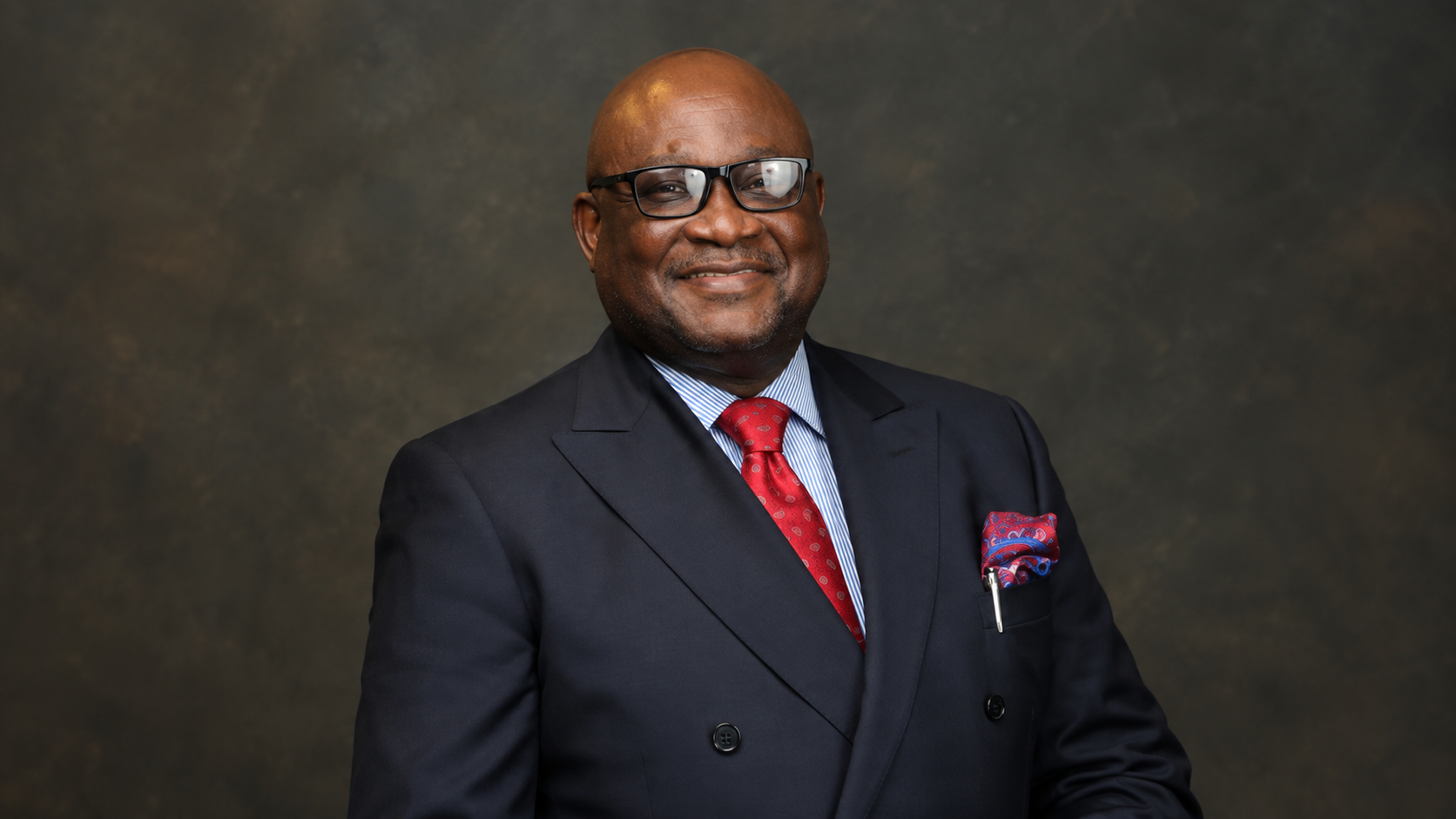
In Nigeria’s fast-moving fintech ecosystem, where funding rounds, valuations and rapid expansion often dominate the conversation, Babatunde Akin-Moses has chosen a different path. His story is less about spectacular fundraising and more about endurance; less about chasing the next headline and more about building a financial institution capable of surviving the headlines. As the founder and CEO of Sycamore, Akin-Moses has spent the past seven years building a financial services business that now serves more than 400,000 customers and facilitates transactions worth about ₦20 billion every month across its platform.
Behind those numbers is a founder increasingly comfortable with the long game. Sycamore, which began in 2019, has evolved from a lending business into a broader financial services ecosystem, with ambitions spanning lending, asset management, banking, capital markets and international expansion. For Akin-Moses, however, the story begins with a tree.
The company’s name was inspired by the biblical story of Zacchaeus, the short man who climbed a sycamore tree to see Jesus among a crowd. Akin-Moses and his co-founders encountered the story while searching for a name during their time at Lagos Business School. The metaphor resonated. Just as the sycamore tree gave Zacchaeus the elevation he needed to see beyond the crowd, Akin-Moses wanted his company to provide Africans with the financial tools and opportunities to rise above their limitations. That idea became more than a name. It became a philosophy: to make Africans financially prosperous wherever they are.
Seven years later, that ambition has grown into a business with approximately 180 employees across 12 teams. But the journey was anything but linear. Sycamore did not begin with a giant balance sheet or a headline-grabbing venture capital round. It began in Akin-Moses’ living room, and that early experience shaped the company’s DNA.
YOU CAN ALSO READ: Nigeria’s Rising Millionaire Class Masks a Wider Wealth Reality
While some startups pursued rapid expansion through large equity raises, Sycamore took a more conservative route. Akin-Moses says the company has raised less than $250,000 in equity throughout its history, while its debt funding is approaching $10 million. The distinction is important. For Sycamore, fundraising has not been about keeping the lights on. It has been about financing specific opportunities and accelerating an already functioning business.
The company generated about ₦6 billion in revenue last year and is targeting between ₦15 billion and ₦18 billion this year, according to Akin-Moses. Its latest commercial paper programme provides another indication of how the business is positioning itself. Sycamore went to the market seeking to raise ₦3 billion but eventually raised ₦6.8 billion after the offer was reportedly about 200 per cent oversubscribed. Rather than viewing the exercise simply as a funding event, Akin-Moses sees it as part of a much larger journey towards the capital market.
His ambition is clear: take Sycamore public on the Nigerian exchange within the next three to five years. But for Akin-Moses, becoming a public company is not something that should happen overnight. It is a muscle that must be developed. The company has therefore begun exposing itself gradually to the Nigerian capital market through private notes and commercial paper, allowing investors to scrutinise its financial statements, management and strategy.
The company’s commercial paper programme was structured at ₦20 billion, with the first ₦3 billion series attracting subscriptions of almost ₦7 billion. For Akin-Moses, the message from investors is significant. The market is not merely lending Sycamore money; it is beginning to participate in the company’s story. And that story is increasingly about building a financial institution rather than simply running a lending platform.
Sycamore’s next chapter is being shaped around a group structure. The lending business remains central, but the company is expanding into other areas, including asset management and banking, while maintaining a presence outside Nigeria. The evolution reflects a broader shift taking place across Africa’s fintech ecosystem, as the boundaries between fintechs, lenders, banks, payment companies and other financial institutions become increasingly fluid.
Akin-Moses believes controlling more of the financial value chain can create greater opportunities. If millions of transactions are already passing through a platform, owning or controlling additional financial infrastructure can allow the business to capture more value from those transactions. But he is careful not to suggest that acquiring a banking licence automatically creates wealth. Nigeria has hundreds of microfinance banks, he notes. The licence itself is not the advantage. The real advantage lies in what a company can do with the asset. For Sycamore, the opportunity is its existing customer base. More than 400,000 customers potentially give the company a significant starting point for building a broader financial ecosystem.
At the heart of Sycamore’s business is what Akin-Moses describes as the “messy middle.” These are businesses that are too large to depend on small grants but often too small to receive meaningful attention from conventional commercial banks. A growing Nigerian business may need ₦20 million, ₦50 million or even ₦100 million in working capital, yet traditional banking processes can take months. Sycamore’s proposition is built around solving that gap.
Its customers include growing businesses that need access to larger amounts of capital within shorter timelines. The company also offers salary and business loans, although business lending has become increasingly dominant. Akin-Moses argues that this underserved middle represents one of the biggest opportunities in Nigeria’s financial system. The question, in his view, is not whether there are too many financial institutions, but whether enough of them are solving the right problems.
For any financial company, trust is its most valuable currency. Sycamore’s credibility has been tested more than once. In 2023, the company found itself at the centre of confusion after an impersonator allegedly used its legal name in connection with an app. The incident could easily have damaged confidence in the brand. Instead, something unexpected happened. Customers, industry stakeholders and prominent figures publicly defended Sycamore.
For Akin-Moses, that moment became a powerful confirmation that the company had built something beyond a transactional relationship with its customers. People had been watching the company grow. They had seen the journey from a living-room startup to an established financial services business. That history mattered.
The company’s most recent regulatory challenge presented an even greater test. Following regulatory action by the Central Bank of Nigeria, Sycamore was forced to respond rapidly to a situation that Akin-Moses says was largely outside the company’s control. The timing was particularly difficult. He was on holiday in Monaco when the news broke. But the response had already been prepared.
Sycamore had developed contingency plans, prepared communications and established alternative banking arrangements to ensure customers could continue accessing their funds. The company’s application was switched to another banking partner, while management moved quickly to communicate with investors and other stakeholders. The episode offered Akin-Moses a lesson he appears to value deeply: crisis management begins before the crisis.
The speed of Sycamore’s response was not accidental. It was the product of preparation. For a financial institution, where fear can trigger a rush for withdrawals, maintaining customer confidence can be as important as the balance sheet itself. Akin-Moses says customers continued to have access to their money, and the company’s ability to respond quickly helped reinforce the trust it had spent years building.
Akin-Moses has also learned another lesson during his entrepreneurial journey: building a good business is not enough. You have to tell the story. Earlier in his career, he says, he did not fully appreciate the role of public relations and media. His thinking changed. He came to see the media as a critical stakeholder in the startup ecosystem, alongside founders, employees, customers and investors.
He began documenting Sycamore’s journey personally, writing about milestones, offices, challenges and growth. That founder-led storytelling became an important part of the company’s brand-building strategy. Today, employee advocacy is also becoming a major component of Sycamore’s communications strategy. Employees, whom the company calls “citizens”, increasingly share their experiences and milestones online. It is a form of brand building that Akin-Moses believes has generated significant organic credibility.
For all the discussion about finance, technology and capital, Akin-Moses repeatedly returns to one subject: people. The company grew from three co-founders to approximately 180 employees without relying heavily on mass recruitment. Hiring, he says, has generally followed the needs of the business. But his understanding of leadership has evolved.
One of his biggest lessons has been learning that a founder cannot do everything. He describes himself as naturally independent and someone who likes to get things done himself. But scaling a business forced him to confront the limits of that instinct. The solution was to hire people smarter than himself in their areas of expertise, give them autonomy and allow them to lead.
That philosophy is reflected in his view of legacy. Akin-Moses says he would be more proud of creating wealth and opportunities for employees than simply building a company with impressive financial numbers. He wants people to look back and say Sycamore was where they managed people for the first time, bought their first car, travelled abroad or experienced a significant career breakthrough. For him, those are not peripheral outcomes. They are part of the company’s success.
Yet Akin-Moses is candid about the areas where he is still evolving. As the company becomes larger, he recognises the need to move further away from operational details and spend more time thinking about the bigger picture. He does not describe himself as a micromanager, but acknowledges that he can become deeply involved when circumstances demand it. The challenge now is delegation. The founder who once had to do almost everything must learn to build an organisation that does not depend on him doing everything.
Nigeria’s financial technology space is crowded, with new lenders, fintechs, microfinance banks and digital financial platforms continuing to emerge. Akin-Moses’ response to competition is pragmatic. Companies copy one another, and he admits Sycamore has copied ideas from others too. The question, therefore, is not who owns an idea, but who executes it better.
For Akin-Moses, strategy ultimately comes down to customer behaviour. If two companies offer similar products, the company that better persuades the customer to choose its product wins. That philosophy allows him to view competition less as a threat and more as a test of execution.
Perhaps one of the most interesting aspects of Akin-Moses’ vision is his belief that Nigeria’s financial services industry remains too concentrated around Lagos and other major urban centres. He believes enormous opportunities remain outside the traditional fintech bubble. The challenge is that serving less-developed markets can be expensive. Businesses that have achieved deep penetration across Nigeria have often had to invest years and significant capital to build those networks.
Sycamore intends to move gradually in that direction. Its future expansion plans include additional African markets, potentially including East Africa and Ghana, while the company is already building an international presence in the United Kingdom. The longer-term ambition is to reach Africans wherever they live, including markets such as the United States and Canada.
An IPO would represent a major milestone, but it is not Akin-Moses’ only ambition. One of his most striking goals is to make at least 100 Sycamore employees financially wealthy through an eventual liquidity event. It is an ambition that says a great deal about how he views entrepreneurship. The company is not simply a machine for generating revenue. It is intended to be a platform for wealth creation.
That philosophy also explains Sycamore’s investment in initiatives such as Battle of the Bots, an inter-school robotics competition designed to expose young Africans to robotics, artificial intelligence, coding and STEM education. What began partly as a marketing opportunity has increasingly evolved into a corporate social responsibility commitment. For Akin-Moses, the connection is obvious: financial prosperity cannot be separated from technological capability, education and innovation.
The children building robots today may be the entrepreneurs creating Africa’s next generation of companies tomorrow. It is another expression of the same philosophy that inspired the company’s name: creating platforms that help people rise.
YOU CAN ALSO READ: Nigeria Moves to Unlock $50bn Offshore Oil Investment With New Fiscal Framework
Akin-Moses is acutely aware that Sycamore’s deliberate strategy has a cost. It has taken longer. The company could perhaps have grown faster with more aggressive fundraising. But he accepts the trade-off. The current investment environment, he believes, is increasingly rewarding fundamentals over hype. Revenue matters. Customers matter. Employees matter. Systems matter. Intellectual property matters. And ultimately, the ability to build a sustainable business matters.
For a founder who began in a living room, this is perhaps the most important transformation of all. Sycamore is no longer simply a startup trying to prove that it can survive. It is becoming an institution preparing to be scrutinised by public markets.
If Akin-Moses’ entrepreneurial philosophy can be distilled into a few ideas, they are surprisingly simple: be patient, surround yourself with good people, stay optimistic, solve real problems and keep building. He credits his parents for instilling his optimism and believes positive and functional relationships are essential to surviving the difficult days of entrepreneurship.
He also believes founders should spend more time learning before launching, while recognising that there is no perfect moment to begin. Looking back, he says he might have benefited from spending more time gaining experience within the financial ecosystem before starting Sycamore. He also believes he could have invested more aggressively in exceptional talent during the company’s early years.
Perhaps his most important lesson is that building a company is ultimately a human endeavour. Technology may power the platform. Capital may finance the growth. Regulation may define the boundaries. But people build the institution.
That is why, seven years after Sycamore began, Akin-Moses is less interested in celebrating how far he has come than in explaining how much further there is to go. The ambition is no longer simply to build a successful Nigerian fintech. It is to build a financial ecosystem capable of travelling with Africans across borders, products and generations.
And if the sycamore metaphor still holds, Akin-Moses’ work is ultimately about elevation — giving people the financial height to see opportunities that might otherwise remain hidden.
The tree has grown considerably since 2019. But for its builder, the real work may only just be beginning.