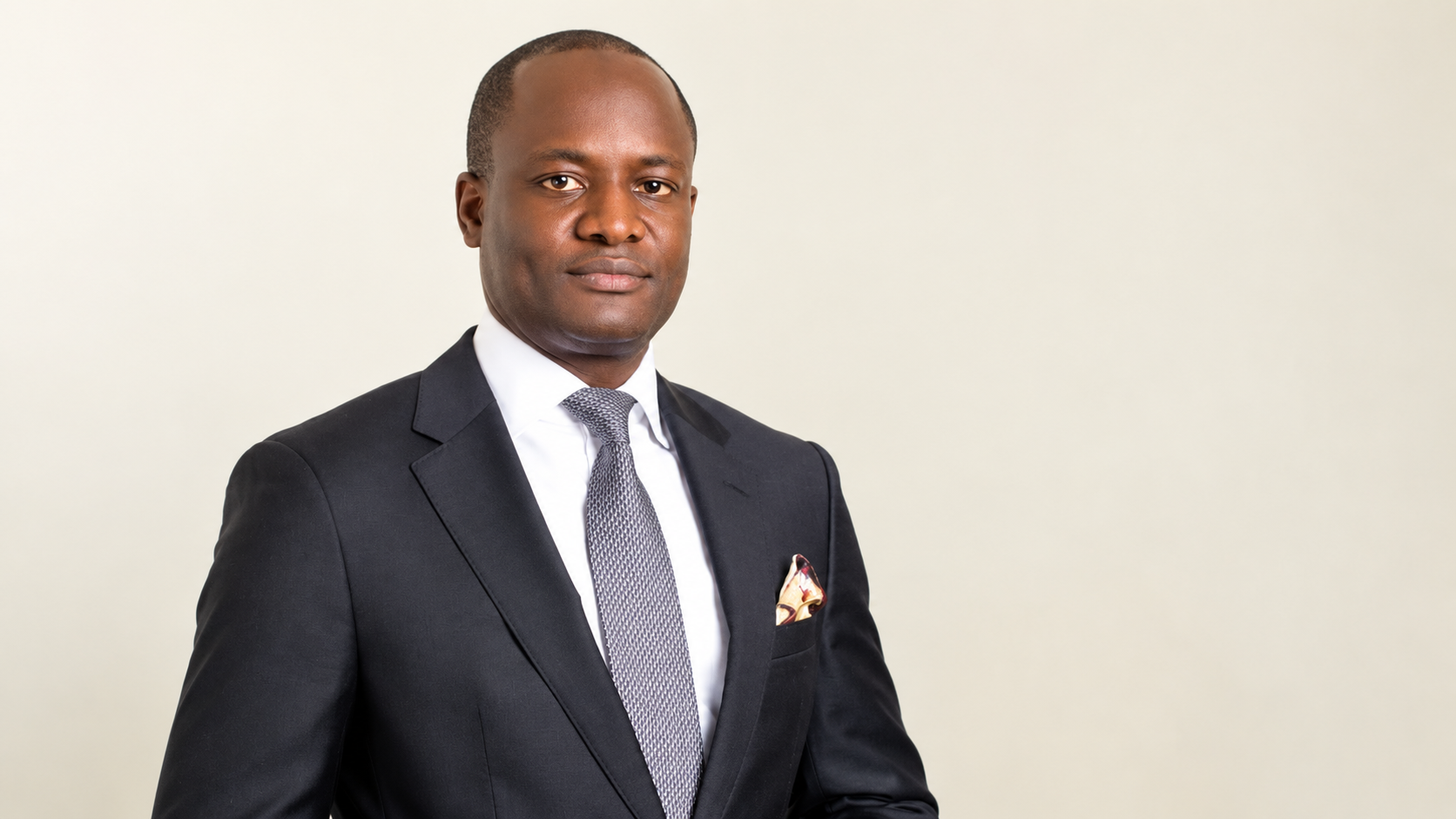
At a defining moment for Nigeria’s insurance industry, the Managing Director and Chief Executive Officer of AIICO Insurance Plc, Babatunde Fajemirokun is making a compelling case for an insurance sector that does more than protect against risk, one that actively enables investment, mobilises long-term capital and supports the country’s ambition of becoming a $1 trillion economy.
As the industry emerges from a major recapitalisation exercise, Fajemirokun sees the development not as the conclusion of a regulatory process, but as the beginning of a more consequential journey. For him, stronger capital must translate into stronger underwriting, faster claims settlement, greater innovation and deeper insurance penetration across Nigeria.
His perspective comes at a pivotal time. The recapitalisation exercise saw 43 insurance and reinsurance companies meet the new minimum capital requirements, with eight other operators undergoing final regulatory checks. The exercise is expected to strengthen insurers’ financial capacity, attract investment and improve their ability to underwrite larger risks.
For Fajemirokun, however, the real significance of recapitalisation goes beyond balance sheets. “Fundamentally, the first thing would be to derisk economic activity,” he explained, noting that insurance enables individuals and businesses to invest, expand and take productive risks with greater confidence.
YOU CAN ALSO READ: The Asset No Creditor Can Seize
He also draws attention to one of the insurance industry’s most powerful contributions: the mobilisation of long-term capital. Life insurers, he noted, can carry liabilities stretching as far as 30 years, creating pools of capital capable of supporting infrastructure, housing finance and other long-term investments. In his assessment, this makes insurance recapitalisation “fundamental and foundational” to Nigeria’s $1 trillion economic ambition.
Yet Fajemirokun is clear that capital alone does not create resilience. He describes the new minimum capital requirement as only a floor, with the next important stage being the implementation of risk-based capital, which would require insurers to maintain capital in line with the risks on their books.
“Absorbing shocks going forward is really about ensuring underwriting discipline, investment discipline and ensuring that subsequent governance is in line with the intent of the law,” he said. For him, true resilience will depend on how responsibly insurers deploy their stronger capital base and prepare for the evolving regulatory framework.
Fajemirokun also sees a significant opportunity to attract foreign investment into Nigeria’s insurance market. International investors, he explained, typically look for scale, transparency and a credible exit route. The recapitalisation has increased scale, while the Nigerian Exchange provides transparency and a potential exit mechanism.
He pointed to the historical performance of insurance stocks on the Nigerian Exchange as evidence of investor interest, noting that the insurance index outperformed the broader market in 2004 and 2005. Although interest slowed in 2026, he expects investment activity to increase as investors gain greater visibility into how insurers deploy their new capital.
But perhaps the biggest challenge before the industry is earning the trust of ordinary Nigerians. For years, insurance penetration has remained below its potential, and Fajemirokun believes the answer lies less in simply selling cheaper insurance and more in transforming the customer experience.
“Recapitalisation is just part of the story. I think it’s just part of the journey,” he said, stressing that stronger capital must ultimately translate into better service and greater confidence among policyholders.
He argues that the new regulatory framework has strengthened consumer protection and reduced some of the grounds previously used to reject claims. Going forward, insurers will need to become more willing and efficient in settling legitimate claims.
For Fajemirokun, claims settlement is central to insurance penetration. He believes the reluctance of Nigerians to purchase insurance is not fundamentally about price or awareness, but about confidence that claims will be honoured.
“Capital is good, but now how we utilise that capital to ensure that we now bring more people to be covered under insurance will be fundamentally driven by how well we pay our claims and how efficiently we do so,” he said.
Technology and distribution, he believes, will be critical to expanding coverage. While commercial insurance has achieved stronger penetration, retail insurance remains an enormous opportunity. Insurers must invest in technology and distribution models that bring insurance closer to individuals and embed it into everyday purchasing decisions.
He also advocates greater transparency around claims, suggesting that insurers could eventually publish information showing the claims they pay, how long settlement takes and the claims they decline. Such transparency, he believes, would help demonstrate that insurers pay significantly more claims than they reject and could gradually change public perceptions of the industry.
Fajemirokun is equally realistic about the structural changes that recapitalisation could trigger. He expects mergers and acquisitions to emerge as the industry adjusts to the eventual risk-based capital regime. Inflation and currency depreciation can increase the value of assets, liabilities and reserves, making a dynamic capital framework increasingly important.
Beyond regulation, he identifies policy certainty as one of the most important lessons from the recapitalisation process. Investors, he argued, are unlikely to commit capital when policy direction remains uncertain. The signing of the new law helped stimulate renewed interest in insurance stocks, and he expects that interest to continue as the opportunities created by the reforms become clearer.
He also believes the dynamic nature of the new framework will allow regulatory capital requirements to evolve alongside changes in the macroeconomic environment, rather than relying solely on periodic increases in minimum capital.
But perhaps his strongest message to insurance executives is about discipline. Fajemirokun believes insurers must generate returns above their cost of capital and resist the temptation to deploy new capital simply to gain market share.
“We must write business for underwriting profit,” he stressed, warning against using new capital to undercut competitors because such a strategy ultimately benefits neither customers nor the industry.
His objective is therefore not merely to build insurers that are stronger today, but institutions capable of remaining resilient for decades. “One of the key lessons from this is to ensure that we are resilient in 25 years, not just resilient today,” he said.
Looking ahead, Fajemirokun sees the possibility of Nigerian insurance companies moving significantly higher on the African insurance landscape. He estimates that Nigerian insurers currently rank among roughly the top 50 in Africa but believes recapitalisation could help push them towards the top 20, while driving greater penetration, attracting talent and strengthening the industry’s contribution to the national economy.
YOU CAN ALSO READ: Why Great Founders, Not Great Ideas, Build Billion-Dollar Companies – Kola Aina
More importantly, he believes insurance companies possess the skills and talent required to manage many of the risks associated with Nigeria’s economic transformation, from underwriting and market risks to credit and operational risks. For him, this makes insurance more than a financial service; it is essential economic infrastructure.
The challenge of financing Nigeria’s growth, particularly the ambition of a $1 trillion economy, cannot be separated from the ability to manage risk. Without insurers capable of absorbing and transferring significant risks, certain investments and economic activities could struggle to achieve the momentum required for scale.
His leadership also extends beyond AIICO Insurance. As Deputy Chairman of the Nigerian Insurance Association, Fajemirokun was part of the wider industry engagement that contributed to the development of the new regulatory framework. He highlighted collaboration between regulators, government and professional bodies, including the Nigerian Insurance Association and other industry associations.
That collaborative approach offers another important lesson: sustainable industry reform requires stakeholders to work together rather than operate in isolation. Fajemirokun’s outlook is therefore centred on an insurance industry that earns trust through performance, deploys capital with discipline and becomes a stronger partner in Nigeria’s economic transformation.
As Nigeria moves beyond recapitalisation, the opportunity before the industry is substantial. For Fajemirokun, the next chapter will be defined not simply by how much capital insurers hold, but by what that capital makes possible — stronger businesses, deeper investment, faster claims settlement, wider insurance coverage and a more resilient Nigerian economy.