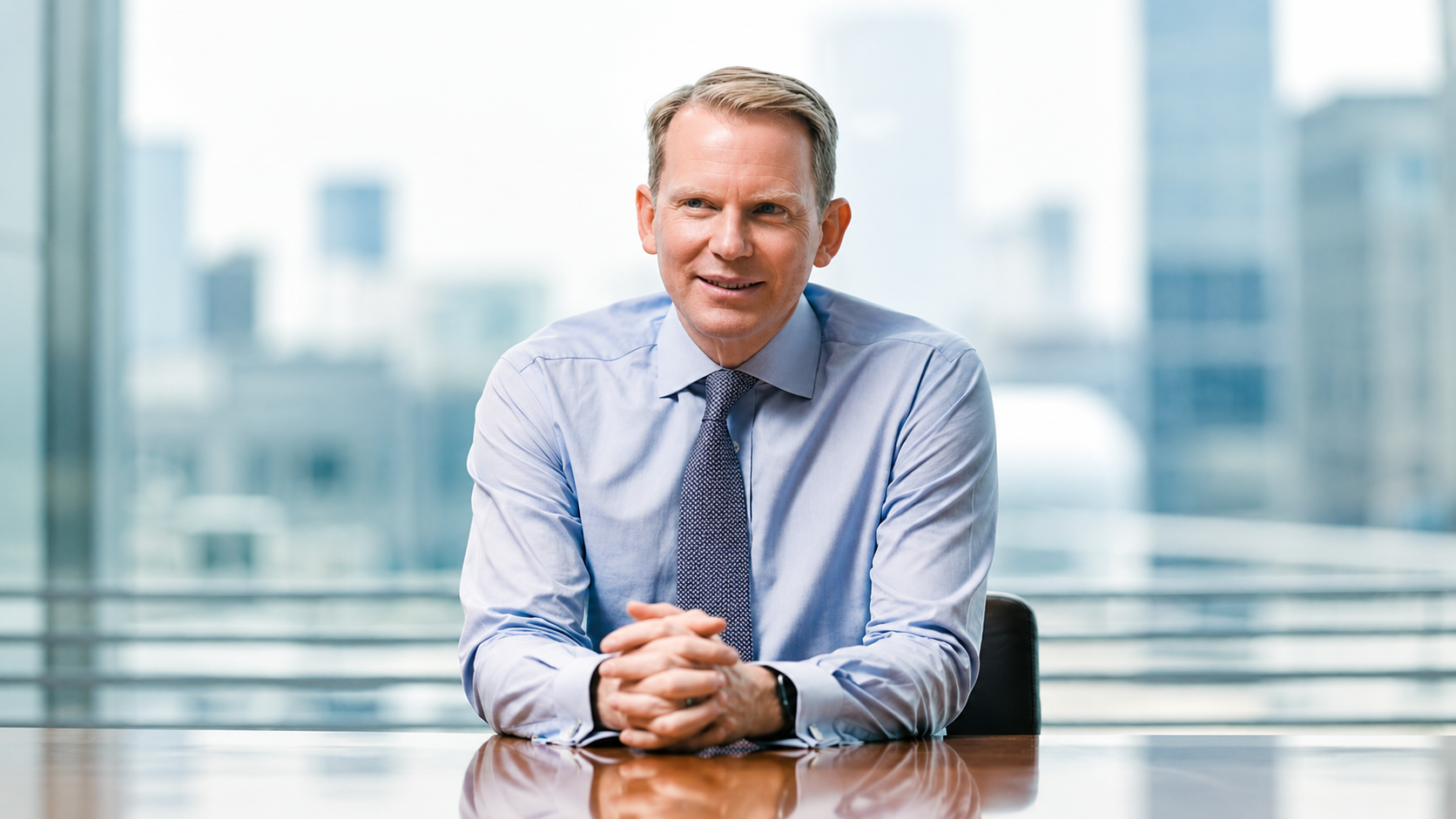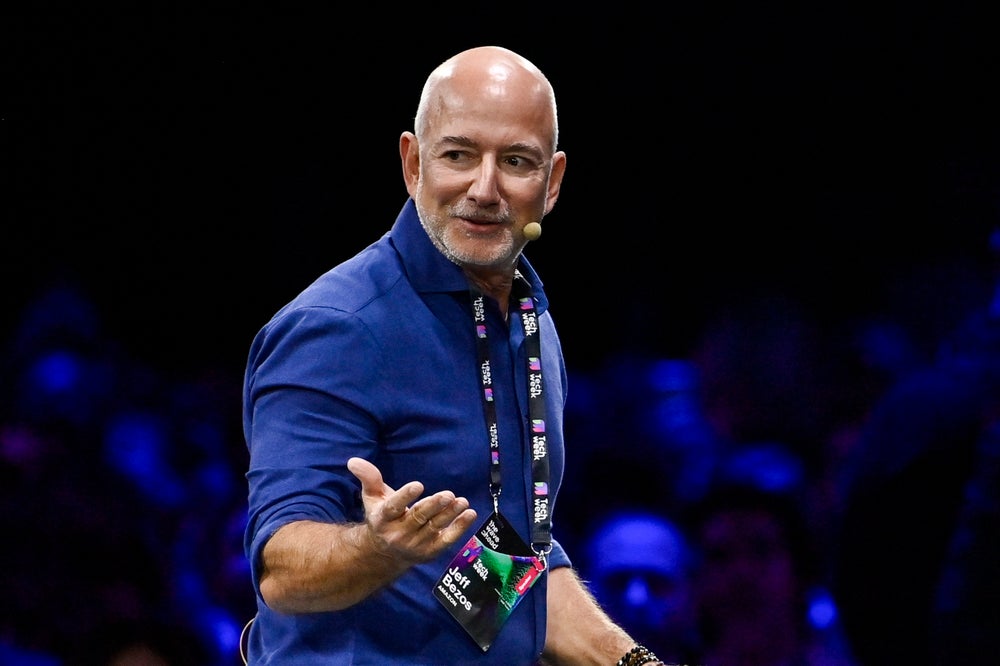
Inside the vast, humming floor of Blue Origin, where rockets are assembled with industrial precision and long-term ambition is treated as engineering discipline rather than rhetoric, Jeff Bezos moves through the space with the calm focus of someone thinking in decades, not news cycles.
Speaking on the broader economic mood in the United States, Bezos acknowledged the rising intensity of public debate around wealth, inequality, and the billionaire class. The conversation, he noted, has shifted noticeably compared to a decade ago, reflecting deeper structural tensions within the economy.
He described what he sees as a “tale of two economies,” where one segment of society is thriving in an era of technological acceleration while another is struggling with the rising cost of essentials like rent and groceries. For Bezos, the issue is not merely rhetorical or political but fundamentally structural.
YOU CAN ALSO READ: The Future Arrived Faster Than Expected: Jensen Huang on AI’s New Computing Explosion
He cautioned against what he called the “easy narrative” of blame, arguing that political discourse often gravitates toward identifying villains rather than diagnosing root causes. In his view, this approach may be emotionally satisfying but fails to produce meaningful long-term solutions.
Instead, he emphasized a problem-solving philosophy familiar from his leadership at Amazon: the discipline of “working backwards” and applying root-cause analysis. In operational terms, he referenced the idea of repeatedly asking “why” until the underlying source of a problem is identified, then fixing it at the foundation so it does not reappear.
Bezos argued that sustainable economic progress requires the same rigor. Superficial fixes, he suggested, may offer short-term relief, but durable outcomes require structural solutions that address incentives, systems, and inefficiencies at scale.
The discussion then turned to taxation and fairness, where Bezos engaged directly with one of the most politically sensitive issues in American economic life.
He pointed to examples of middle-income earners facing significant tax burdens, arguing that policy debates should focus more on system design and less on symbolic narratives. In his framing, the objective should be to ensure that economic pressure on working households is carefully evaluated in the context of broader fiscal trade-offs.
At the same time, he acknowledged that debates around tax progressivity are legitimate policy questions. Whether a system should be more progressive, how revenue is distributed, and how public services are funded, he said, are all valid areas of democratic disagreement.
However, he drew a distinction between policy debate and public vilification of wealth creation, suggesting that conflating the two risks distracting from the real issues.
Bezos also challenged the framing of a “revenue problem” in the United States, arguing instead that the deeper issue lies in spending efficiency and institutional performance. To illustrate his point, he referenced public sector systems such as education, where he questioned whether high levels of spending consistently translate into improved outcomes.
Using a comparison to large-scale operational systems, he suggested that inefficiency at institutional level often leads to diminishing returns, regardless of budget size. In his view, the central question is not simply how much is spent, but how effectively resources are deployed.
Throughout the conversation, Bezos returned repeatedly to a broader theme: systems matter more than slogans. Whether discussing taxation, public services, or economic inequality, his argument centered on the idea that outcomes are shaped by design, execution, and feedback loops rather than intent alone.
YOU CAN ALSO READ: Tayo Aina’s Mission to Change How the World Sees Africa
He framed the current moment as one that demands clearer thinking rather than louder debate, especially as technological change, automation, and space commercialization reshape the boundaries of economic possibility.
At the core of his philosophy, as reflected in both Blue Origin and Amazon, is a belief in long-term optimization: building systems that improve over time, scale efficiently, and compound value across generations.
In that sense, Bezos positioned the debate not simply as a question of wealth distribution, but as a deeper challenge of institutional design in an era of rapid technological and economic transformation.